32,95 €
32,95 €
inkl. MwSt.
Sofort per Download lieferbar

16 °P sammeln
32,95 €
Als Download kaufen
32,95 €
inkl. MwSt.
Sofort per Download lieferbar
16 °P sammeln
Jetzt verschenken
Alle Infos zum eBook verschenken
32,95 €
inkl. MwSt.
Sofort per Download lieferbar
Alle Infos zum eBook verschenken
16 °P sammeln

Andere Kunden interessierten sich auch für
") Eichmann's Jews (eBook, ePUB)15,99 €
Eichmann's Jews (eBook, ePUB)15,99 €") Voices From The Silence (eBook, ePUB)0,00 €
Voices From The Silence (eBook, ePUB)0,00 €") Gendarmes, Bureaucrats, and Jews (eBook, ePUB)20,95 €
Gendarmes, Bureaucrats, and Jews (eBook, ePUB)20,95 €") Uncle Otto's Puppet Theatre (eBook, ePUB)9,99 €
Uncle Otto's Puppet Theatre (eBook, ePUB)9,99 €") Seven Sisters (eBook, ePUB)10,95 €
Seven Sisters (eBook, ePUB)10,95 €") Austro-Hungarian Cruisers and Destroyers 1914-18 (eBook, ePUB)9,95 €
Austro-Hungarian Cruisers and Destroyers 1914-18 (eBook, ePUB)9,95 €") Dreams of a Great Small Nation (eBook, ePUB)13,99 €
Dreams of a Great Small Nation (eBook, ePUB)13,99 €







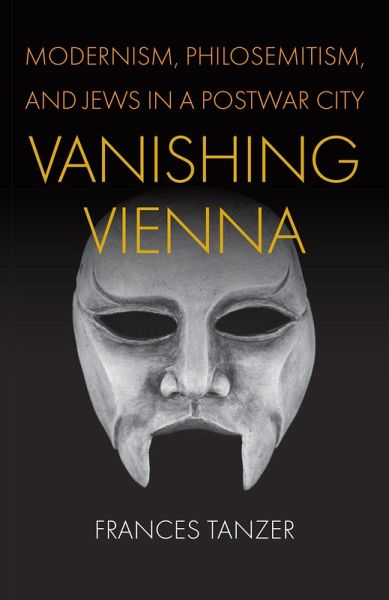
In Vanishing Vienna historian Frances Tanzer traces the reconstruction of Viennese culture from the 1938 German annexation through the early 1960s. The book reveals continuity in Vienna's cultural history across this period and a framework for interpreting Viennese culture that relies on antisemitism, philosemitism, and a related discourse of Jewish presence and absence. This observation demands a new chronology of cultural reconstruction that links the Nazi and postwar years, and a new geography that includes the history of refugees from Nazi Vienna.
Rather than presenting the Nazi, exile, and postwar periods as discrete chapters of Vienna's history, Tanzer argues that they are part of a continuous spectrum of cultural evolution-the result of which was the creation of a coherent Austrian identity and culture that emerged by the 1950s. As she shows, antisemitism and philosemitism were not contradictory forces in post-Nazi Austrian culture. They were deeply interconnected aspirations in a city where nostalgia for the past dominated cultural reconstruction efforts and supported seemingly contradictory impulses. Viennese nostalgia at times concealed the perpetuation of antisemitic fantasies of the city without Jews. At the same time, the postwar desire to return to a pre-Nazi past relied upon notions of Austrian culture that Austrian Jews perfected in exile, as well as on the symbolic remigration of a mostly imagined "Jewish" culture now taxed with redeeming Austria in the aftermath of the Holocaust. From this perspective, philosemitism is much more than a simple inversion of antisemitism-instead, Tanzer argues, philosemitism, problematic as it may be, defines Vienna in the era of postwar reconstruction.
In this way, Vanishing Vienna uncovers a rarely discussed phenomenon of the aftermath of the Holocaust-a society that consumes, redefines, and bestows symbolic meaning on the victims in their absence.
Rather than presenting the Nazi, exile, and postwar periods as discrete chapters of Vienna's history, Tanzer argues that they are part of a continuous spectrum of cultural evolution-the result of which was the creation of a coherent Austrian identity and culture that emerged by the 1950s. As she shows, antisemitism and philosemitism were not contradictory forces in post-Nazi Austrian culture. They were deeply interconnected aspirations in a city where nostalgia for the past dominated cultural reconstruction efforts and supported seemingly contradictory impulses. Viennese nostalgia at times concealed the perpetuation of antisemitic fantasies of the city without Jews. At the same time, the postwar desire to return to a pre-Nazi past relied upon notions of Austrian culture that Austrian Jews perfected in exile, as well as on the symbolic remigration of a mostly imagined "Jewish" culture now taxed with redeeming Austria in the aftermath of the Holocaust. From this perspective, philosemitism is much more than a simple inversion of antisemitism-instead, Tanzer argues, philosemitism, problematic as it may be, defines Vienna in the era of postwar reconstruction.
In this way, Vanishing Vienna uncovers a rarely discussed phenomenon of the aftermath of the Holocaust-a society that consumes, redefines, and bestows symbolic meaning on the victims in their absence.
Dieser Download kann aus rechtlichen Gründen nur mit Rechnungsadresse in A, D ausgeliefert werden.