49,95 €
inkl. MwSt.
Sofort per Download lieferbar
25 °P sammeln

Andere Kunden interessierten sich auch für
") The Fading of the Maoist Vision (eBook, PDF)45,95 €
The Fading of the Maoist Vision (eBook, PDF)45,95 €") Local Politics and Democratization in Russia (eBook, PDF)45,95 €
Local Politics and Democratization in Russia (eBook, PDF)45,95 €") Electoral Politics in India (eBook, PDF)45,95 €
Electoral Politics in India (eBook, PDF)45,95 €") New Dimensions of Politics in India (eBook, PDF)29,95 €
New Dimensions of Politics in India (eBook, PDF)29,95 €") Indian Politics and Society since Independence (eBook, PDF)51,95 €
Indian Politics and Society since Independence (eBook, PDF)51,95 €") Party Politics and Democratization in Indonesia (eBook, PDF)45,95 €
Party Politics and Democratization in Indonesia (eBook, PDF)45,95 €") Local Politics in Indonesia (eBook, PDF)45,95 €
Local Politics in Indonesia (eBook, PDF)45,95 €




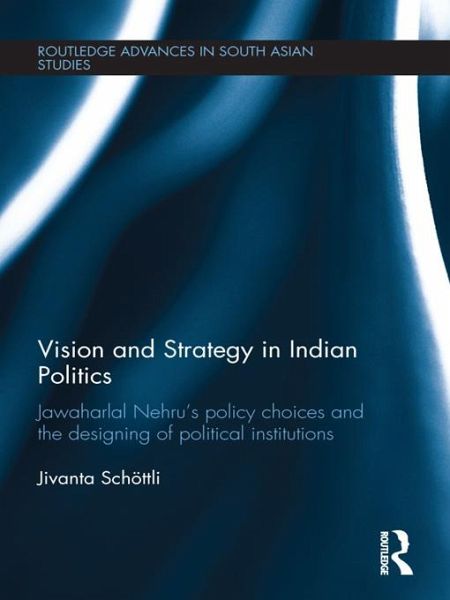
The 1950s in India were a crucial transition phase where the legacy and institutions of British rule had to be transformed to fit the needs of a post-colonial state. This period is closely associated with India's first Prime Minister, Jawaharlal Nehru (1947 - 64). Selecting three key policies closely associated with him, the book traces the political origins of the Panchasheela Agreement with China in 1954, the Hindu Code Bills of 1955 and 1956 and the founding of the Planning Commission in 1950. Each provides a window into the compulsions of Indian domestic politics at the time as well as the parameters of parliamentary debate.
The book goes on to discuss how these policies correspond to the pillars of Nehru's vision for a modern, independent India that encapsulated socialism, nonalignment and secularism and assesses their long-run impact in Indian politics. With a growing recognition of the resilience of India's political arrangements, the analysis is particularly relevant to those interested in the politics of transition and modernisation, and contributes to studies on Political Institutions and South Asian Politics.
The book goes on to discuss how these policies correspond to the pillars of Nehru's vision for a modern, independent India that encapsulated socialism, nonalignment and secularism and assesses their long-run impact in Indian politics. With a growing recognition of the resilience of India's political arrangements, the analysis is particularly relevant to those interested in the politics of transition and modernisation, and contributes to studies on Political Institutions and South Asian Politics.
Dieser Download kann aus rechtlichen Gründen nur mit Rechnungsadresse in A, B, BG, CY, CZ, D, DK, EW, E, FIN, F, GR, HR, H, IRL, I, LT, L, LR, M, NL, PL, P, R, S, SLO, SK ausgeliefert werden.