Sie sind bereits eingeloggt. Klicken Sie auf 2. tolino select Abo, um fortzufahren.
Bitte loggen Sie sich zunächst in Ihr Kundenkonto ein oder registrieren Sie sich bei bücher.de, um das eBook-Abo tolino select nutzen zu können.
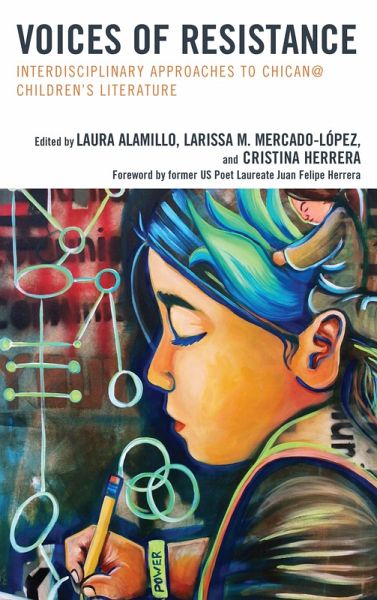
The banning of Mexican-American Studies and censorship of Chican@-authored books in Arizona were part of a succession of anti-Mexican and anti-Chican@ policies that were enacted across the state and in the education system. The counterstories offered through these classes and literature not only created a sense of cultural inclusion, but ignited a political and activist consciousness among the mostly Chican@ youth, and reinvigorated conversations among educators about the teaching of race, ethnicity, and culture in the classroom, particularly through youth literature. While most work on youth…mehr
The banning of Mexican-American Studies and censorship of Chican@-authored books in Arizona were part of a succession of anti-Mexican and anti-Chican@ policies that were enacted across the state and in the education system. The counterstories offered through these classes and literature not only created a sense of cultural inclusion, but ignited a political and activist consciousness among the mostly Chican@ youth, and reinvigorated conversations among educators about the teaching of race, ethnicity, and culture in the classroom, particularly through youth literature. While most work on youth literature has emphasized "multicultural" literature as a means of being inclusive, Voices of Resistance: Interdisciplinary Approaches to Chican@ Children's Literature recognizes that our present moment--one that is rife with continued anti-Mexican sentiment but that has given rise to our first Chicano National Poet Laureate--demands a more focused study of children's and young adult literature by and about Chican@s. This collection re-examines how we view multicultural and diversity literature and recognize literature that invites social transformation. Using multi- and interdisciplinary perspectives to critically examine a wide range of Chican@ children's pictures book and young adult novels, this collection reaffirms Chicano@ children's literature as a means to achieve equity and social change.
Die Herstellerinformationen sind derzeit nicht verfügbar.
Autorenporträt
Laura Alamillo, received her PhD from the University of California at Berkeley in Language, Literacy and Culture. She is currently a Professor in Literacy, Early Childhood, Bilingual and Special Education Department at Fresno State. Her research includes looking at the education of emergent bilingual children specifically at humanizing and culturally sustaining teaching practices in multlingual classrooms. Larissa M. Mercado-López received her PhD in Latina Literature from the University of Texas at San Antonio and is currently an associate professor of Women's Studies at California State University, Fresno, and children's book writer.. Her research focuses on Chicana feminisms, Tejana literature, and intersectional feminist fitness studies. Cristina Herrera holds a PhD in Literature from Claremont Graduate University and is associate professor and chair of Chicano and Latin American Studies at California State University, Fresno. She has published on Chicana literature, motherhood, and young adult literature, among other topics.
Inhaltsangabe
Foreword- U.S. Poet Laureate Juan Felipe Herrera Introduction Section One: Tracing Chican@ Identity and Consciousness Chapter 1- Entre Tejana y Chicana: Tracing Proto-Chicana Identity and Consciousness in Tejana Young Adult Fiction and Poetry Larissa M. Mercado-Lopez Chapter 2- Imagineering a Mexican American Girl: Josefina Montoya (1824) Patricia Trujillo Chapter 3- A Bone to Pick: Día de los Muertos in Children's Literature Roxana Loza and Tanya González Chapter 4- Águila: Personal Reflections on Reading Chicanx Picturebooks from the Inside Out Lettycia Terrones Section Two: Negotiating Gender and Sexuality Chapter 5- A Portrait of the Artist as a Muchachito: Sense, Sensibility, and the Poetic Transcendence of Masculinity in Juan Felipe Herrera's Downtown Boy Phillip Serrato Chapter 6- Not So Sweet Quince: Teenage Angst and Mother-Daughter Strife in Belinda Acosta's Young Adult Novel, Damas, Dramas, and Ana Ruiz Cristina Herrera Chapter 7- You wanna be a chump/or a champ?: Constructions of Masculinity, Absent Fathers, and Conocimiento in Juan Felipe Herrera's Downtown Boy Sonia Alejandra Rodriguez Chapter 8- Phantasmagoric Eroticisms: Imagining Queertopias in Chicana/o Children's Literature Cecilia Aragon Section Three: Transformative Pedagogies: Reflections from Inside and Outside the Classroom Chapter 9- Chillante Pedagogy, 'She Worlds,' and Testimonio as Text/Image: Toward a Chicana Feminist Pedagogy in the works of Maya Christina Gonzalez Elena Aviles Chapter 10- Was it All a Dream? Chicana/o Children and Mestiza Consciousness in Super Cilantro Girl (2003) and Tata's Gift (2014) Katherine Elizabeth Bundy Chapter 11- Translanguaging con mi abuela: Chican@ Children's Literature as a Means to Elevate Language Practices in Our Homes Laura Alamillo Chapter 12- Identity Texts in Linguistically and Culturally Sustaining Classrooms: Chican@ Children's Literature, Student Voice and Belonging Lilian Cibils, Virginia Gallegos, Enrique Avalos, and Fabian Martinez
Foreword- U.S. Poet Laureate Juan Felipe Herrera Introduction Section One: Tracing Chican@ Identity and Consciousness Chapter 1- Entre Tejana y Chicana: Tracing Proto-Chicana Identity and Consciousness in Tejana Young Adult Fiction and Poetry Larissa M. Mercado-Lopez Chapter 2- Imagineering a Mexican American Girl: Josefina Montoya (1824) Patricia Trujillo Chapter 3- A Bone to Pick: Día de los Muertos in Children's Literature Roxana Loza and Tanya González Chapter 4- Águila: Personal Reflections on Reading Chicanx Picturebooks from the Inside Out Lettycia Terrones Section Two: Negotiating Gender and Sexuality Chapter 5- A Portrait of the Artist as a Muchachito: Sense, Sensibility, and the Poetic Transcendence of Masculinity in Juan Felipe Herrera's Downtown Boy Phillip Serrato Chapter 6- Not So Sweet Quince: Teenage Angst and Mother-Daughter Strife in Belinda Acosta's Young Adult Novel, Damas, Dramas, and Ana Ruiz Cristina Herrera Chapter 7- You wanna be a chump/or a champ?: Constructions of Masculinity, Absent Fathers, and Conocimiento in Juan Felipe Herrera's Downtown Boy Sonia Alejandra Rodriguez Chapter 8- Phantasmagoric Eroticisms: Imagining Queertopias in Chicana/o Children's Literature Cecilia Aragon Section Three: Transformative Pedagogies: Reflections from Inside and Outside the Classroom Chapter 9- Chillante Pedagogy, 'She Worlds,' and Testimonio as Text/Image: Toward a Chicana Feminist Pedagogy in the works of Maya Christina Gonzalez Elena Aviles Chapter 10- Was it All a Dream? Chicana/o Children and Mestiza Consciousness in Super Cilantro Girl (2003) and Tata's Gift (2014) Katherine Elizabeth Bundy Chapter 11- Translanguaging con mi abuela: Chican@ Children's Literature as a Means to Elevate Language Practices in Our Homes Laura Alamillo Chapter 12- Identity Texts in Linguistically and Culturally Sustaining Classrooms: Chican@ Children's Literature, Student Voice and Belonging Lilian Cibils, Virginia Gallegos, Enrique Avalos, and Fabian Martinez
Es gelten unsere Allgemeinen Geschäftsbedingungen: www.buecher.de/agb
Impressum
www.buecher.de ist ein Internetauftritt der buecher.de internetstores GmbH
Geschäftsführung: Monica Sawhney | Roland Kölbl | Günter Hilger
Sitz der Gesellschaft: Batheyer Straße 115 - 117, 58099 Hagen
Postanschrift: Bürgermeister-Wegele-Str. 12, 86167 Augsburg
Amtsgericht Hagen HRB 13257
Steuernummer: 321/5800/1497
USt-IdNr: DE450055826