16,95 €
16,95 €
inkl. MwSt.
Sofort per Download lieferbar

8 °P sammeln
16,95 €
Als Download kaufen
16,95 €
inkl. MwSt.
Sofort per Download lieferbar
8 °P sammeln
Jetzt verschenken
Alle Infos zum eBook verschenken
16,95 €
inkl. MwSt.
Sofort per Download lieferbar
Alle Infos zum eBook verschenken
8 °P sammeln

Andere Kunden interessierten sich auch für
") Pirates and Privateers in the 18th Century (eBook, ePUB)5,99 €
Pirates and Privateers in the 18th Century (eBook, ePUB)5,99 € (eBook, ePUB)") The Speedicut Papers Book 5 (1871-1879) (eBook, ePUB)2,99 €
The Speedicut Papers Book 5 (1871-1879) (eBook, ePUB)2,99 € (eBook, ePUB)") The Speedicut Papers Book 4 (1865-1871) (eBook, ePUB)2,99 €
The Speedicut Papers Book 4 (1865-1871) (eBook, ePUB)2,99 €") The Dark Side of the Enlightenment (eBook, ePUB)14,95 €
The Dark Side of the Enlightenment (eBook, ePUB)14,95 € (eBook, ePUB)") The Speedicut Papers Book 6 (1879-1884) (eBook, ePUB)2,99 €
The Speedicut Papers Book 6 (1879-1884) (eBook, ePUB)2,99 €") Hastenbeck 1757 (eBook, ePUB)13,95 €
Hastenbeck 1757 (eBook, ePUB)13,95 €") Bodies and Narrativity Across the Early Modern World (eBook, ePUB)0,00 €
Bodies and Narrativity Across the Early Modern World (eBook, ePUB)0,00 €







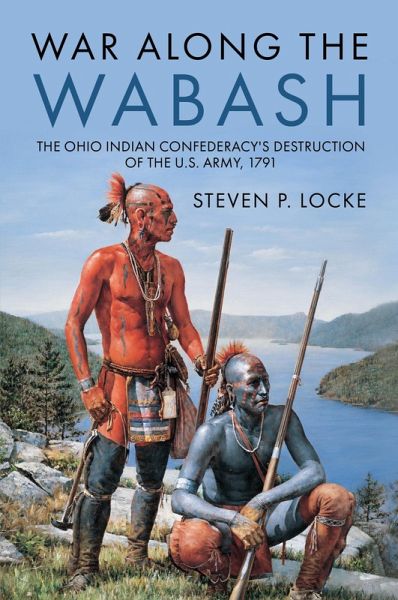
An account of the 1791 battle during the Northwest Indian War in which the U.S. Army suffered heavy losses at the hands of Native Americans.
"In vivid and evocative prose, Locke describes the moment when one of the most talented and consequential generations of Native leadership in American history confronted the young republic's Founding Fathers with devastating results. War along the Wabash is a compelling retelling of one of the most pivotal events in the nation's early history." -Dr. Larry Nelson, Faculty Emeritus in History, and former Chair; Department of History at Francis Marion University
On November four, 1791, a coalition of warriors determined to set the Ohio River as a permanent boundary between tribal lands and white settlements faced an army led by Arthur St. Clair The resulting horrific struggle ended in the greatest defeat of an American army at the hands of Native Americans.
The road to the battle of the Wabash began when Arthur St. Clair was appointed to lead an army into the heart of the Ohio Indian Confederacy while building a string of fortifications along the way. He would face difficulties in recruiting, training, feeding, and arming volunteer soldiers. From the moment St. Clair's shattered force began its retreat from the Wabash the men blamed the officers, and the officers in turn blamed their men. For over two centuries most historians have blamed either the officer corps, enlisted soldiers, an entangled logistical supply line, poor communications, or equipment. The destruction of the army resulted in a stunned Congress authorizing a regular army in 1792.
This book, the result of thirty years of research, puts the battle into the context of the last quarter of the 18th century, exploring how the central importance of land ownership to Europeans arriving in North America resulted in unrelenting demographic pressure on indigenous tribes, as well as the enormous obstacles standing in the way of the fledgling American Republic in paying off its enormous war debts.
This is the story of how a small band of determined indigenous peoples defended their homeland, destroyed an invading American army, and forced a fundamental shift in the way in which the United States waged war.
" War Along the Wabash is an excellent introduction to the Washington Administration's Indian policy as well as that of the post-revolutionary United States and a guide to a significant, but often overlooked battle of the early Indian Wars." - War History Network
"In vivid and evocative prose, Locke describes the moment when one of the most talented and consequential generations of Native leadership in American history confronted the young republic's Founding Fathers with devastating results. War along the Wabash is a compelling retelling of one of the most pivotal events in the nation's early history." -Dr. Larry Nelson, Faculty Emeritus in History, and former Chair; Department of History at Francis Marion University
On November four, 1791, a coalition of warriors determined to set the Ohio River as a permanent boundary between tribal lands and white settlements faced an army led by Arthur St. Clair The resulting horrific struggle ended in the greatest defeat of an American army at the hands of Native Americans.
The road to the battle of the Wabash began when Arthur St. Clair was appointed to lead an army into the heart of the Ohio Indian Confederacy while building a string of fortifications along the way. He would face difficulties in recruiting, training, feeding, and arming volunteer soldiers. From the moment St. Clair's shattered force began its retreat from the Wabash the men blamed the officers, and the officers in turn blamed their men. For over two centuries most historians have blamed either the officer corps, enlisted soldiers, an entangled logistical supply line, poor communications, or equipment. The destruction of the army resulted in a stunned Congress authorizing a regular army in 1792.
This book, the result of thirty years of research, puts the battle into the context of the last quarter of the 18th century, exploring how the central importance of land ownership to Europeans arriving in North America resulted in unrelenting demographic pressure on indigenous tribes, as well as the enormous obstacles standing in the way of the fledgling American Republic in paying off its enormous war debts.
This is the story of how a small band of determined indigenous peoples defended their homeland, destroyed an invading American army, and forced a fundamental shift in the way in which the United States waged war.
" War Along the Wabash is an excellent introduction to the Washington Administration's Indian policy as well as that of the post-revolutionary United States and a guide to a significant, but often overlooked battle of the early Indian Wars." - War History Network
Dieser Download kann aus rechtlichen Gründen nur mit Rechnungsadresse in A, B, BG, CY, CZ, D, DK, EW, E, FIN, F, GR, HR, H, IRL, I, LT, L, LR, M, NL, PL, P, R, S, SLO, SK ausgeliefert werden.