52,95 €
52,95 €
inkl. MwSt.
Erscheint vor. 17.12.25

26 °P sammeln
52,95 €
Als Download kaufen
52,95 €
inkl. MwSt.
Erscheint vor. 17.12.25
26 °P sammeln
Jetzt verschenken
Alle Infos zum eBook verschenken
52,95 €
inkl. MwSt.
Erscheint vor. 17.12.25
Alle Infos zum eBook verschenken
26 °P sammeln

Andere Kunden interessierten sich auch für
") Waste Management for Small Towns in Developing Countries (eBook, ePUB)52,95 €
Waste Management for Small Towns in Developing Countries (eBook, ePUB)52,95 €") Management and Supervisory Practices for Environmental Professionals (eBook, PDF)49,95 €
Management and Supervisory Practices for Environmental Professionals (eBook, PDF)49,95 €") Waste: The Basics (eBook, PDF)18,95 €
Waste: The Basics (eBook, PDF)18,95 €") Handbook of Flood Risk Management in Developing Countries (eBook, PDF)52,95 €
Handbook of Flood Risk Management in Developing Countries (eBook, PDF)52,95 €") Environmental Treatment Technologies for Municipal, Industrial and Medical Wastes (eBook, PDF)47,95 €
Environmental Treatment Technologies for Municipal, Industrial and Medical Wastes (eBook, PDF)47,95 €") Municipal Solid Waste Management in Developing Countries (eBook, PDF)48,95 €
Municipal Solid Waste Management in Developing Countries (eBook, PDF)48,95 €") Solid Waste Management in Canada (eBook, PDF)39,95 €
Solid Waste Management in Canada (eBook, PDF)39,95 €
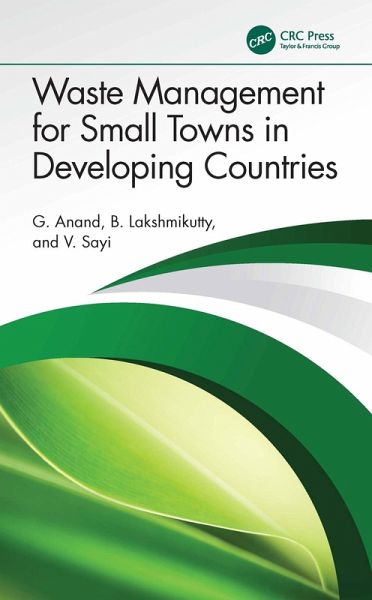
This book provides a comprehensive technical overview of waste management strategies tailored for small towns, emphasising innovative approaches to integrated waste management. It explores methods to transform various types of waste into value-added products, fostering circular economy practices at both micro and macro levels. The text examines the implementation of waste management solutions across different countries, addressing market development, pricing strategies, and financial viability to achieve sustainability goals. Key topics include municipal solid waste management, faecal sludge treatment, sewage treatment, and grey water management, supported by case studies and practical examples.
Features:
This book is designed for students, researchers, and professionals in Environmental, Chemical, and Civil Engineering, Urban Planning, and related fields, as well as NGOs, administrators, and stakeholders in waste management.
Features:
- Reviews integrated waste management systems for small towns with a focus on circular economy principles.
- Highlights indigenous and sustainable waste management practices.
- Explores innovative techniques such as degradable waste segregation and manufacturing value-added products from waste components.
- Covers municipal solid waste management, faecal sludge treatment, sewage treatment, and grey water management, particularly in developing countries.
- Discusses project management aspects and financial implications of waste management initiatives.
- Includes numerical examples, practical problems, and case studies from various countries to illustrate real-world applications.
This book is designed for students, researchers, and professionals in Environmental, Chemical, and Civil Engineering, Urban Planning, and related fields, as well as NGOs, administrators, and stakeholders in waste management.
Dieser Download kann aus rechtlichen Gründen nur mit Rechnungsadresse in A, B, BG, CY, CZ, D, DK, EW, E, FIN, F, GR, HR, H, IRL, I, LT, L, LR, M, NL, PL, P, R, S, SLO, SK ausgeliefert werden.