0,49 €
inkl. MwSt.
Sofort per Download lieferbar
0 °P sammeln

Andere Kunden interessierten sich auch für
 (eBook, ePUB)") Waverly (Summarized Edition) (eBook, ePUB)0,49 €
Waverly (Summarized Edition) (eBook, ePUB)0,49 € (eBook, ePUB)") Waverly (Unabridged) (eBook, ePUB)0,49 €
Waverly (Unabridged) (eBook, ePUB)0,49 €") Waverly (eBook, ePUB)1,99 €
Waverly (eBook, ePUB)1,99 € (eBook, ePUB)") Waverly (Unabridged) (eBook, ePUB)0,49 €
Waverly (Unabridged) (eBook, ePUB)0,49 €") Waverly (eBook, ePUB)2,13 €
Waverly (eBook, ePUB)2,13 €") Waverly (eBook, ePUB)1,99 €
Waverly (eBook, ePUB)1,99 €") The Roman Traitor (eBook, ePUB)2,13 €
The Roman Traitor (eBook, ePUB)2,13 €





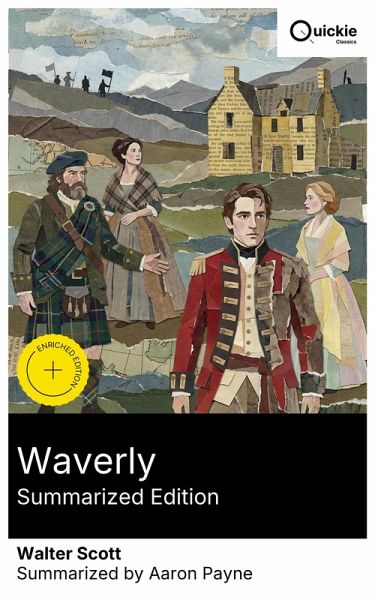
Waverly (1814) virtually inaugurates the historical novel, entwining Edward's education with the Jacobite Rising of 1745. Stationed in Scotland, the ingenuous officer drifts from Hanoverian loyalty toward Fergus and Flora Mac-Ivor, counterpoised by Rose Bradwardine and her whimsical Baron. Scott's digressive, ironic narrator layers dialect, humor, and antiquarian detail across settings from Tully-Veolan to Prestonpans, balancing romance with skeptical realism to meditate on loyalty, modernization, and the forging of British identity. Scott-lawyer, ballad-collector, and Sheriff-Depute-married Enlightenment training to Tory sympathy for order and tradition. Years of legal practice and fieldwork among Borders and Highlands, plus conversations with Jacobite descendants, furnished the novel's documentary texture. Writing anonymously, he sought to reconcile Scotland's fractured past with a commercial, imperial present and to preserve vanishing customs without sentimental falsification. For readers of historical fiction, political history, and the literature of national identity, Waverly remains indispensable: adventurous yet reflective, generous in sympathy yet clear-eyed about rebellion's costs. Begin here to see how the modern historical novel was made-and why later writers learned history by learning Scott. Quickie Classics summarizes timeless works with precision, preserving the author's voice and keeping the prose clear, fast, and readable-distilled, never diluted. Enriched Edition extras: Introduction · Synopsis · Historical Context · Author Biography · Brief Analysis · 4 Reflection Q&As · Editorial Footnotes.
Dieser Download kann aus rechtlichen Gründen nur mit Rechnungsadresse in A, B, BG, CY, CZ, D, DK, EW, E, FIN, F, GR, H, IRL, I, LT, L, LR, M, NL, PL, P, R, S, SLO, SK ausgeliefert werden.