41,95 €
inkl. MwSt.
Sofort per Download lieferbar
21 °P sammeln

Andere Kunden interessierten sich auch für
") Weirding Civilization (eBook, PDF)41,95 €
Weirding Civilization (eBook, PDF)41,95 €") Understanding Early Large-Scale Collectives (eBook, ePUB)41,95 €
Understanding Early Large-Scale Collectives (eBook, ePUB)41,95 €") Infrastructures of Religion and Power (eBook, ePUB)41,95 €
Infrastructures of Religion and Power (eBook, ePUB)41,95 €") Broken Bodies, Places and Objects (eBook, ePUB)30,95 €
Broken Bodies, Places and Objects (eBook, ePUB)30,95 €") Mutualist Archaeology (eBook, ePUB)38,95 €
Mutualist Archaeology (eBook, ePUB)38,95 €") Shadow Archaeologies (eBook, ePUB)49,95 €
Shadow Archaeologies (eBook, ePUB)49,95 €") An Introduction to Peruvian Archaeology (eBook, ePUB)41,95 €
An Introduction to Peruvian Archaeology (eBook, ePUB)41,95 €





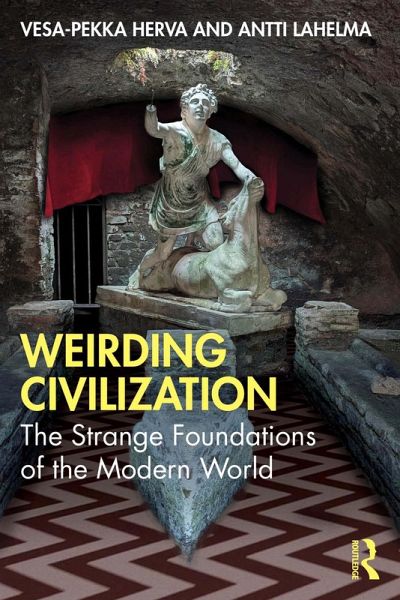
Weirding Civilization examines the irrational foundations of civilization, from the Bronze Age to the Anthropocene. Inspired by Twin Peaks and Lovecraftian horror, it reveals how weirdness - disorienting, monstrous, and ambivalent - has shaped human society since the rise of the first complex civilizations.
Taking 'weirding' as its conceptual lens, the book examines hallmarks of civilization such as urbanism, money, and writing, uncovering their layered and often non-rational nature. While the concept of weirding has gained traction across disciplines, from literature studies to climate science, this book applies it systematically to early civilizations for the first time. Weirdness emerges as ruptures in experienced reality, arising from the complex interplay between humans and non-humans. The book explores how civilization has unfolded in relation to hidden, invisible, and unknown dimensions of reality. Accessible and thought-provoking, it broadens conceptual horizons, offering fresh insights into the past and present while inviting readers to embrace that which resists categorization. With a primary focus on Europe and the Near East, it also addresses global questions of modernity, technology, and cultural imagination.
This book is essential for archaeologists, anthropologists, and historians studying complex societies as well as for readers fascinated by unconventional approaches to history and civilization. It appeals to anyone seeking to disrupt conventional understandings of humanity's development.
Taking 'weirding' as its conceptual lens, the book examines hallmarks of civilization such as urbanism, money, and writing, uncovering their layered and often non-rational nature. While the concept of weirding has gained traction across disciplines, from literature studies to climate science, this book applies it systematically to early civilizations for the first time. Weirdness emerges as ruptures in experienced reality, arising from the complex interplay between humans and non-humans. The book explores how civilization has unfolded in relation to hidden, invisible, and unknown dimensions of reality. Accessible and thought-provoking, it broadens conceptual horizons, offering fresh insights into the past and present while inviting readers to embrace that which resists categorization. With a primary focus on Europe and the Near East, it also addresses global questions of modernity, technology, and cultural imagination.
This book is essential for archaeologists, anthropologists, and historians studying complex societies as well as for readers fascinated by unconventional approaches to history and civilization. It appeals to anyone seeking to disrupt conventional understandings of humanity's development.
Dieser Download kann aus rechtlichen Gründen nur mit Rechnungsadresse in A, B, BG, CY, CZ, D, DK, EW, E, FIN, F, GR, HR, H, IRL, I, LT, L, LR, M, NL, PL, P, R, S, SLO, SK ausgeliefert werden.