160,95 €
160,95 €
inkl. MwSt.
Sofort per Download lieferbar

80 °P sammeln
160,95 €
Als Download kaufen
160,95 €
inkl. MwSt.
Sofort per Download lieferbar
80 °P sammeln
Jetzt verschenken
Alle Infos zum eBook verschenken
160,95 €
inkl. MwSt.
Sofort per Download lieferbar
Alle Infos zum eBook verschenken
80 °P sammeln

Andere Kunden interessierten sich auch für
") The Emergence of Self in Educational Contexts (eBook, PDF)72,95 €
The Emergence of Self in Educational Contexts (eBook, PDF)72,95 €") Development of Writing Skills in Children in Diverse Cultural Contexts (eBook, PDF)120,95 €
Development of Writing Skills in Children in Diverse Cultural Contexts (eBook, PDF)120,95 €") The Scholarship of Teaching and Learning in Higher Education: An Evidence-Based Perspective (eBook, PDF)191,95 €
The Scholarship of Teaching and Learning in Higher Education: An Evidence-Based Perspective (eBook, PDF)191,95 €") International Handbook of Psychological Well-Being in Children and Adolescents (eBook, PDF)128,95 €
International Handbook of Psychological Well-Being in Children and Adolescents (eBook, PDF)128,95 €") Implementing Mental Health Promotion (eBook, PDF)136,95 €
Implementing Mental Health Promotion (eBook, PDF)136,95 €") In the Middle (eBook, PDF)23,95 €
In the Middle (eBook, PDF)23,95 €") The Millennial Adolescent (eBook, PDF)26,95 €
The Millennial Adolescent (eBook, PDF)26,95 €

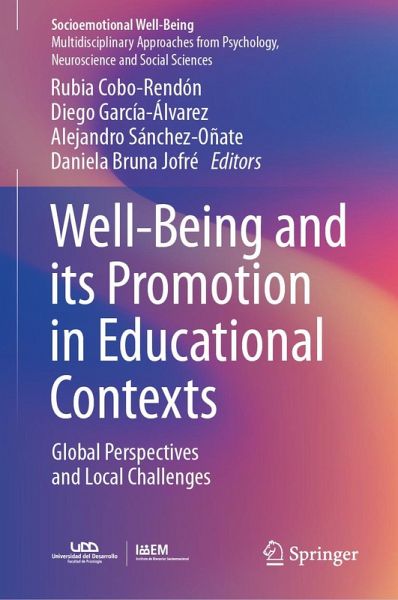
This book provides a comprehensive examination of well-being in educational contexts, focusing on the promotion of well-being across diverse educational settings. It examines how well-being develops, is promoted by various factors, and is strengthened throughout different life stages, including the well-being of educators. The book's unique emphasis explores how well-being interventions can be adapted to diverse cultural and socioeconomic realities. Through an approach that integrates theories and empirical evidence, it presents an in-depth analysis of how well-being can be promoted in different educational scenarios and cultural contexts.
The book is structured in six parts. Part I introduces the concept of well-being in educational settings, providing a foundational framework and exploring its relevance as both a right and a driver of inclusive and sustainable development. Part II focuses on well-being during early and primary education, highlighting the importance of interpersonal relationships, emotional development, and early interventions to strengthen cognitive and socioemotional skills. Part III focuses on adolescence, examining the critical role of schools in shaping youth well-being, with an emphasis on peer relationships, multiculturalism, resilience, and positive psychological development. Part IV addresses well-being in higher education, exploring mental health, student retention, academic engagement, socioemotional interventions, and the use of character strengths as predictors of flourishing. Part V shifts the focus to educators, discussing the well-being of teachers and school staff, their emotional experiences, and institutional conditions. Finally, Part VI presents concluding reflections on well-being as a transformative foundation for education across all levels and roles.
Well-Being and its Promotion in Educational Contexts: Global Perspectives and Local Challenges will be of interest to both researchers and professionals interested in studying and implementing strategies to promote well-being in educational settings, such as school, educational and developmental psychologists, as well as schoolteachers and school administrators, academic researchers and policy makers.
The book is structured in six parts. Part I introduces the concept of well-being in educational settings, providing a foundational framework and exploring its relevance as both a right and a driver of inclusive and sustainable development. Part II focuses on well-being during early and primary education, highlighting the importance of interpersonal relationships, emotional development, and early interventions to strengthen cognitive and socioemotional skills. Part III focuses on adolescence, examining the critical role of schools in shaping youth well-being, with an emphasis on peer relationships, multiculturalism, resilience, and positive psychological development. Part IV addresses well-being in higher education, exploring mental health, student retention, academic engagement, socioemotional interventions, and the use of character strengths as predictors of flourishing. Part V shifts the focus to educators, discussing the well-being of teachers and school staff, their emotional experiences, and institutional conditions. Finally, Part VI presents concluding reflections on well-being as a transformative foundation for education across all levels and roles.
Well-Being and its Promotion in Educational Contexts: Global Perspectives and Local Challenges will be of interest to both researchers and professionals interested in studying and implementing strategies to promote well-being in educational settings, such as school, educational and developmental psychologists, as well as schoolteachers and school administrators, academic researchers and policy makers.
Dieser Download kann aus rechtlichen Gründen nur mit Rechnungsadresse in A, B, BG, CY, CZ, D, DK, EW, E, FIN, F, GR, HR, H, IRL, I, LT, L, LR, M, NL, PL, P, R, S, SLO, SK ausgeliefert werden.