Sie sind bereits eingeloggt. Klicken Sie auf 2. tolino select Abo, um fortzufahren.
Bitte loggen Sie sich zunächst in Ihr Kundenkonto ein oder registrieren Sie sich bei bücher.de, um das eBook-Abo tolino select nutzen zu können.
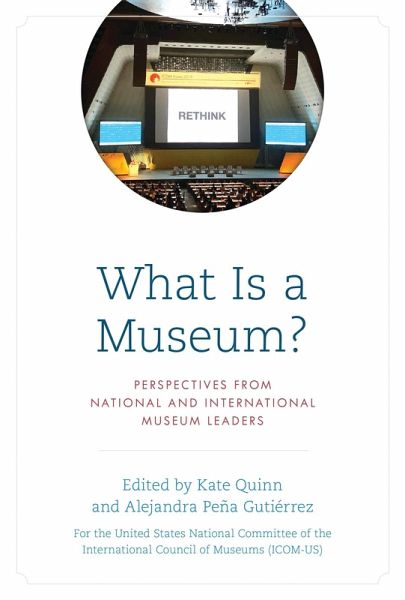
What makes a museum, a museum in the 21st century? This is a transformative moment in the history of museums. Traditionally, the museums have been defined by the functions of collecting, preserving, documenting, researching, exhibiting and in other ways, communicating and interpreting evidence of human culture and history for the benefit of everyone. But what is the future of museums in a fast-changing world of economic uncertainty, social disruption, health challenges and climate change? Can museums reflect the accountability and transparency under which they are expected to acquire and use…mehr
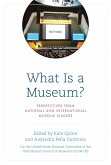
What makes a museum, a museum in the 21st century? This is a transformative moment in the history of museums. Traditionally, the museums have been defined by the functions of collecting, preserving, documenting, researching, exhibiting and in other ways, communicating and interpreting evidence of human culture and history for the benefit of everyone. But what is the future of museums in a fast-changing world of economic uncertainty, social disruption, health challenges and climate change? Can museums reflect the accountability and transparency under which they are expected to acquire and use their material, financial, social, and intellectual resources? What Is a Museum? Perspectives from National and International Museum Leaders shares perspectives from dedicated professionals investigating how museums can meet their ethical, political, social, cultural, and environmental responsibilities in the years to come. In a series of essays, well-known leaders in the museum sector and related fields contribute to our understanding of the current and future challenges facing museums around the world. ICOM-US Co-Chair and Secretary of the Smithsonian, Lonnie G. Bunch III, summarizes the issues and provides guidance for the future of museums. Questions explored include: What lessons have we learned from the needs of the communities we claim to serve and how can we better adapt to shift our priorities in a faster and more efficient way? How can museums not only chronicle the past, but depict the present and become touchstones for the future of their communities?In a world aimed towards political correctness, how do we address collections resulting from power and colonization?This book is a valuable resource for anyone interested in why museums matter today, what their future holds, and how to change them
Die Herstellerinformationen sind derzeit nicht verfügbar.
Autorenporträt
Kate Quinn has been working and teaching in the museum field for close to two decades. As Director of Exhibitions and Special Programs at the University of Pennsylvania Museum of Archaeology and Anthropology, she directed more than 100 special exhibitions and gallery projects, most with an international focus. In 2020 she was appointed the Executive Director of the Michener Art Museum. She is a Master Lecturer in the Museum Studies program at the University of the Arts in Philadelphia and is Co-Chair of the Programming Committee for the United States National Committee of the International Council of Museums (ICOM-US).
Alejandra Peña Gutiérrez has been working for 30 years as a visual arts and museum professional. Her career started in Mexico City where she worked at various museums before she became director of the Museo del Palacio de Bellas Artes. She was General Deputy Director of the Instituto Nacional de Bellas Artes in Mexico; Director of the Museo de Arte de Ponce in Puerto Rico. In 2021 she was appointed Director of the Weisman Art Museum of the University of Minnesota. Peña Gutiérrez is Co-Chair of the Programming Committee for ICOM-US, she is also a member of the Risk Management Standing Committee of ICOM General Created in 1946, the International Council of Museums (ICOM) is a non-governmental organization maintaining formal relations with UNESCO and having a consultative status with the United Nations Economic and Social Council. ICOM also partners with entities such as the World Intellectual Property Organization, Interpol, and the World Customs Organization in order to carry out its international public service missions, which include fighting illicit traffic in cultural goods and promoting risk management and emergency preparedness to protect world cultural heritage in the event of natural or man-made disasters.
Inhaltsangabe
Forward Preface By: Kate Quinn Epigraph Part One: What is a Museum? Chapter 1: Overview By Alejandra Peña Gutierrez Chapter 2: Public Trust at American Museums Today: Observations and Priorities By Thomas Loughman Chapter 3: How Do We Center People in Museums? By Elaine Heumann Gurian Chapter 4: Museums Must Be More: : ICOM's Definition of "Museum" Needs to Take into Account How the Field Has Changed and Where It Is Heading By W. Richard West Part Two: Safe Places or Social Spaces? Chapter 5: Safe Places or Social Spaces? By Diana Pardue Chapter 6: On Museums and Place: Alejandra Peña Gutierrez with Andrés Roldán Chapter 7: Yes, And: Museums as Safe Places AND Social Spaces By Linda Norris Chapter 8 :Crossing Museum Boundaries: From Gallery Space to Protest Place By Ihor Poshyvailo Part Three: The Function of Collecting Chapter 9: The Functions of Collecting: An Inquiry By William Eiland Chapter 10: KonMari in the Museum: Collecting Front, Center and Back By Danielle Kuijten Chapter 11: On Museums and Collecting: Kate Quinn with Anne Pasternak Chapter 12: Beyond Colonial Collecting By Tukufu Zuberi Part Four: The Whiteness of Museums Chapter 13: The Whiteness of Museums By Lyndel King Chapter 14: What Makes a Museum, A Museum: From the African Experience By George Okello Abungu Chapter 15:The Work is Never Done: Reckoning and Reparation in Museums By Christopher Bedford Chapter 16: "Dysmantaling" a Museum By Christina Woods Part Five: Museums as Influencers Chapter 17 :Museums as Influencers By Diana Pardue Chapter 18: To Be of Influence Starts with Being Open to Influence By Kelly McKinley Chapter 19: Can a New Definition Convert Museums into Influencers? By Lauran Bonilla-Merchav and Bruno Burlon Soares Chapter 20: Redefine the Museum: Making a Case for Embracing Our Inner Agent of Change By Lisa Sasaki Part Six: Crisis: Environmentalism, Sustainability and Museums Chapter 21: Beyond Crisis: Museums and Sustainability By William Eiland Chapter 22: Imagining Another World at the National Public Housing Museum By Lisa Yun Lee Chapter 23: Weaving New Narratives: Museums and Sustainable Futures By Morien Rees Chapter 24: The Museum's Role in the Global Effort to Create a World Where Everyone and Everything Can Thrive By Sarah Sutton Part Seven: What Now/Now What? Chapter 25: Seizing the Moment: The Evolution of the 21st- Century Museum By Lonnie G. Bunch, III Index About the Contributors About ICOM-US About the Editors
Es gelten unsere Allgemeinen Geschäftsbedingungen: www.buecher.de/agb
Impressum
www.buecher.de ist ein Internetauftritt der buecher.de internetstores GmbH
Geschäftsführung: Monica Sawhney | Roland Kölbl | Günter Hilger
Sitz der Gesellschaft: Batheyer Straße 115 - 117, 58099 Hagen
Postanschrift: Bürgermeister-Wegele-Str. 12, 86167 Augsburg
Amtsgericht Hagen HRB 13257
Steuernummer: 321/5800/1497
USt-IdNr: DE450055826