45,95 €
45,95 €
inkl. MwSt.
Sofort per Download lieferbar

23 °P sammeln
45,95 €
Als Download kaufen
45,95 €
inkl. MwSt.
Sofort per Download lieferbar
23 °P sammeln
Jetzt verschenken
Alle Infos zum eBook verschenken
45,95 €
inkl. MwSt.
Sofort per Download lieferbar
Alle Infos zum eBook verschenken
23 °P sammeln

Andere Kunden interessierten sich auch für
") Electoral Management: Institutions and Practices in an Established Democracy (eBook, PDF)45,95 €
Electoral Management: Institutions and Practices in an Established Democracy (eBook, PDF)45,95 €") Elections and Public Opinion in Turkey (eBook, PDF)41,95 €
Elections and Public Opinion in Turkey (eBook, PDF)41,95 €") Japanese Democracy and Lessons for the United States (eBook, PDF)41,95 €
Japanese Democracy and Lessons for the United States (eBook, PDF)41,95 €") Citizenship Agendas in and beyond the Nation-State (eBook, PDF)45,95 €
Citizenship Agendas in and beyond the Nation-State (eBook, PDF)45,95 €") Rethinking the 'Coloured Revolutions' (eBook, PDF)55,95 €
Rethinking the 'Coloured Revolutions' (eBook, PDF)55,95 €") On Extremism and Democracy in Europe (eBook, PDF)21,95 €
On Extremism and Democracy in Europe (eBook, PDF)21,95 €") Routledge Handbook on Elections in the Middle East and North Africa (eBook, PDF)43,95 €
Routledge Handbook on Elections in the Middle East and North Africa (eBook, PDF)43,95 €






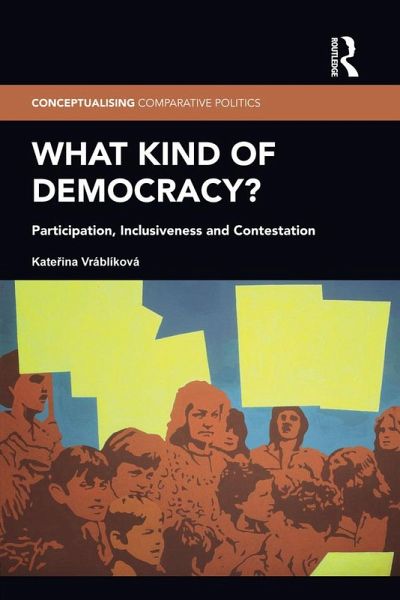
The broad expansion of non-electoral political participation is considered one of the major changes in the nature of democratic citizenship in the 21st century. Most scholars - but also governments, transnational and subnational political institutions, and various foundations - have adopted the notion that contemporary democratic societies need a more politically active citizenry. Yet, contemporary democracies widely differ in the extent to which their citizens get involved in politics beyond voting. Why is political activism other than voting flourishing in the United States, but is less common in Britain and almost non-existent in post-communist countries like Bulgaria? The book shows that the answer does not lie in citizen's predispositions, social capital or institutions of consensual democracy. Instead, the key to understanding cross-country differences in political activism beyond voting rests in democratic structures that combine inclusiveness and contestation.
What Kind of Democracy? is the first book to provide a theoretically driven empirical analysis of how different types of democratic arrangements affect individual participation in non-electoral politics.
What Kind of Democracy? is the first book to provide a theoretically driven empirical analysis of how different types of democratic arrangements affect individual participation in non-electoral politics.
Dieser Download kann aus rechtlichen Gründen nur mit Rechnungsadresse in A, B, BG, CY, CZ, D, DK, EW, E, FIN, F, GR, HR, H, IRL, I, LT, L, LR, M, NL, PL, P, R, S, SLO, SK ausgeliefert werden.