1,99 €
inkl. MwSt.
Sofort per Download lieferbar
0 °P sammeln

Andere Kunden interessierten sich auch für
") When Buffalo Ran (eBook, ePUB)0,49 €
When Buffalo Ran (eBook, ePUB)0,49 €") When We Were Slaves (eBook, ePUB)1,99 €
When We Were Slaves (eBook, ePUB)1,99 €") Acadian Reminiscences (eBook, ePUB)1,99 €
Acadian Reminiscences (eBook, ePUB)1,99 €") Palmetto-Leaves (eBook, ePUB)1,99 €
Palmetto-Leaves (eBook, ePUB)1,99 €") Light Ahead for the Negro (eBook, ePUB)1,99 €
Light Ahead for the Negro (eBook, ePUB)1,99 €") Dewey and Other Naval Commanders (eBook, ePUB)1,99 €
Dewey and Other Naval Commanders (eBook, ePUB)1,99 €") The 'Fan Kwae' at Canton Before Treaty Days 1825-1844 (eBook, ePUB)1,99 €
The 'Fan Kwae' at Canton Before Treaty Days 1825-1844 (eBook, ePUB)1,99 €







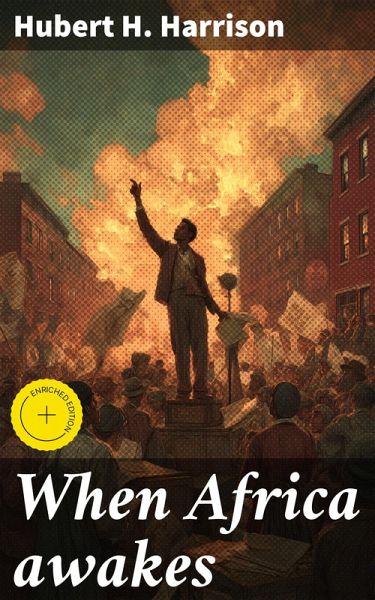
In 'When Africa Awakes,' Hubert H. Harrison masterfully intertwines political advocacy with literary expression, delivering a call to consciousness for African Americans and the global African diaspora. Written in the early 20th century, Harrison's eloquent prose reflects the period's urgent demands for racial justice and self-determination. His work is steeped in the richness of African American culture while engaging with contemporary issues of colonialism and liberation, positioning the text within a broader socio-political context. Harrison's distinct literary style combines passionate rhetoric with insightful critiques, making it both a rallying cry and a profound commentary on racial identity. Hubert H. Harrison, often referred to as the "Father of Harlem Radicalism," was a prolific writer and orator whose life experiences as a child of immigrants in a racially segregated society profoundly shaped his worldview. Influenced by the global currents of Pan-Africanism and socialism, he sought not only to uplift his community but also to empower Africans in their fight against oppression. His own journey from the West Indies to becoming a key figure in the Harlem Renaissance informs the fervent and candid spirit of 'When Africa Awakes.' This book is a vital read for anyone seeking to understand the roots of African American intellectual thought and activism. Harrison's powerful insights are as relevant today as they were at the time of writing, making it essential for scholars, activists, and readers invested in issues of race, identity, and social justice. In this enriched edition, we have carefully created added value for your reading experience: - A succinct Introduction situates the work's timeless appeal and themes. - The Synopsis outlines the central plot, highlighting key developments without spoiling critical twists. - A detailed Historical Context immerses you in the era's events and influences that shaped the writing. - A thorough Analysis dissects symbols, motifs, and character arcs to unearth underlying meanings. - Reflection questions prompt you to engage personally with the work's messages, connecting them to modern life. - Hand-picked Memorable Quotes shine a spotlight on moments of literary brilliance. - Interactive footnotes clarify unusual references, historical allusions, and archaic phrases for an effortless, more informed read.
Dieser Download kann aus rechtlichen Gründen nur mit Rechnungsadresse in A, B, BG, CY, CZ, D, DK, EW, E, FIN, F, GR, H, IRL, I, LT, L, LR, M, NL, PL, P, R, S, SLO, SK ausgeliefert werden.