Sie sind bereits eingeloggt. Klicken Sie auf 2. tolino select Abo, um fortzufahren.
Bitte loggen Sie sich zunächst in Ihr Kundenkonto ein oder registrieren Sie sich bei bücher.de, um das eBook-Abo tolino select nutzen zu können.
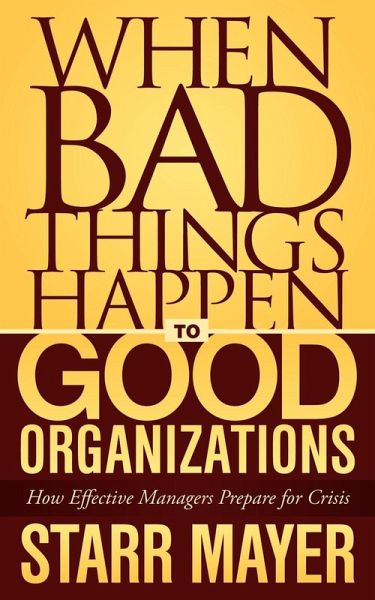
This road map will give confidence to leaders of nonprofit organizations and faith groups facing the unknown with sometimes limited resources. The many examples--of actions which averted calamities and of failures resulting in chaos--are engaging. "When Bad Things Happen to Good Organizations" answers the questions that are often in the backs of the minds of those who lead organizations: How do I know this is a crisis? Can crises be prevented? What do I do when I walk out the door and the media has questions? What actions can our board or council take right now? The guides which are included…mehr
This road map will give confidence to leaders of nonprofit organizations and faith groups facing the unknown with sometimes limited resources. The many examples--of actions which averted calamities and of failures resulting in chaos--are engaging. "When Bad Things Happen to Good Organizations" answers the questions that are often in the backs of the minds of those who lead organizations: How do I know this is a crisis? Can crises be prevented? What do I do when I walk out the door and the media has questions? What actions can our board or council take right now? The guides which are included are easily adapted by any organization. Every nonprofit leader should own "When Bad Things Happen to Good Organizations". Every board should discuss this topic. Every organization should have a plan for "When Bad Things Happen to Good Organizations".
Die Herstellerinformationen sind derzeit nicht verfügbar.
Autorenporträt
Ms. Mayer spent most of her professional life working with traditional nonprofit organizations as well as with universities and churches. As a manager, a consultant and a mediator she worked with groups to prevent or cure the crises which occurred as they pursued their missions. After working as an Executive Director of a nonprofit, she worked with Habitat for Humanity International, most recently as the director of a unit she designed called Risk Prevention and Response. She has conducted workshops and trainings in conflict management, executive transition management, and risk prevention. She has a M.S.W. and a Certificate in Dispute Resolution. She has lived and worked in Scotland, Hong Kong and Jamaica, and currently resides in the Chesapeake region of Virginia.
Inhaltsangabe
Table of Contents: Chapter One: About Crises Questions to Consider External Crises Internal Crises What Makes a Crisis Life-Threatening Prevention and Cure The Keys to Crisis Management Chapter Two: Preventing Crises with Policies The Benefits of Policies Determining Which Policies Are Needed The Essential Documents for a Policy Manual Policies Are Often Overlooked Examples of Preventing Crises with Policies Chapter Three: Preventing Crises with People The People Who Make Up the Board of Directors The Role of the Board Keys to Creating a Highly Functioning Board Areas of Board Vulnerability Examples of Preventing Crises through Board Excellence Staff of Nonprofit Organizations Guidelines for Creating a Strong Staff Executive Transition Management Guidelines for Effective Management of Staff Examples of Preventing Crises through Staff Excellence Chapter Four: Precursors to Crises Measuring Severity Assessing Tools Already in Place Acknowledging and Managing Conflict Timing and Time Two Key Responses to Conflict Conflict Management 101 Bullies Examples of Precursors to Crises Chapter Five: It’s a Crisis Elements of a Crisis An Identified Crisis is the Reality Emergency Plan in Time of Crisis Examples of Crisis Management Chapter Six: The Crisis Has Passed Evaluation Communication Personnel Assessment Critical Conditions for Organizations Examples of Nonprofits in the Aftermath of Crises Chapter Seven: Making the Organization Safe The Importance of Policies and People Identifying and Addressing Precursors to Crises Managing the Emergency Utilizing the Period After the Crisis Creating a Crisis Contingency Plan Developing and Utilizing a Crisis Audit Team Reaping the Rewards of Crisis Management Work Prescriptions In Case of Emergency Crisis Emergency Plan Six Month Plan Emergency Contingency Planning Emergency Data Bank
Table of Contents: Chapter One: About Crises Questions to Consider External Crises Internal Crises What Makes a Crisis Life-Threatening Prevention and Cure The Keys to Crisis Management Chapter Two: Preventing Crises with Policies The Benefits of Policies Determining Which Policies Are Needed The Essential Documents for a Policy Manual Policies Are Often Overlooked Examples of Preventing Crises with Policies Chapter Three: Preventing Crises with People The People Who Make Up the Board of Directors The Role of the Board Keys to Creating a Highly Functioning Board Areas of Board Vulnerability Examples of Preventing Crises through Board Excellence Staff of Nonprofit Organizations Guidelines for Creating a Strong Staff Executive Transition Management Guidelines for Effective Management of Staff Examples of Preventing Crises through Staff Excellence Chapter Four: Precursors to Crises Measuring Severity Assessing Tools Already in Place Acknowledging and Managing Conflict Timing and Time Two Key Responses to Conflict Conflict Management 101 Bullies Examples of Precursors to Crises Chapter Five: It’s a Crisis Elements of a Crisis An Identified Crisis is the Reality Emergency Plan in Time of Crisis Examples of Crisis Management Chapter Six: The Crisis Has Passed Evaluation Communication Personnel Assessment Critical Conditions for Organizations Examples of Nonprofits in the Aftermath of Crises Chapter Seven: Making the Organization Safe The Importance of Policies and People Identifying and Addressing Precursors to Crises Managing the Emergency Utilizing the Period After the Crisis Creating a Crisis Contingency Plan Developing and Utilizing a Crisis Audit Team Reaping the Rewards of Crisis Management Work Prescriptions In Case of Emergency Crisis Emergency Plan Six Month Plan Emergency Contingency Planning Emergency Data Bank
Es gelten unsere Allgemeinen Geschäftsbedingungen: www.buecher.de/agb
Impressum
www.buecher.de ist ein Internetauftritt der buecher.de internetstores GmbH
Geschäftsführung: Monica Sawhney | Roland Kölbl | Günter Hilger
Sitz der Gesellschaft: Batheyer Straße 115 - 117, 58099 Hagen
Postanschrift: Bürgermeister-Wegele-Str. 12, 86167 Augsburg
Amtsgericht Hagen HRB 13257
Steuernummer: 321/5800/1497
USt-IdNr: DE450055826