18,95 €
18,95 €
inkl. MwSt.
Sofort per Download lieferbar

9 °P sammeln
18,95 €
Als Download kaufen
18,95 €
inkl. MwSt.
Sofort per Download lieferbar
9 °P sammeln
Jetzt verschenken
Alle Infos zum eBook verschenken
18,95 €
inkl. MwSt.
Sofort per Download lieferbar
Alle Infos zum eBook verschenken
9 °P sammeln

Andere Kunden interessierten sich auch für
") Where Liberty Dwells, There Is My Country (eBook, PDF)32,95 €
Where Liberty Dwells, There Is My Country (eBook, PDF)32,95 €") Urban and Regional Policy and its Effects (eBook, PDF)22,95 €
Urban and Regional Policy and its Effects (eBook, PDF)22,95 €") The Politics of Knowledge in Central Asia (eBook, PDF)45,95 €
The Politics of Knowledge in Central Asia (eBook, PDF)45,95 €") Higher Education in India (eBook, PDF)41,95 €
Higher Education in India (eBook, PDF)41,95 €") Improving Education in a World of Politics (eBook, PDF)19,95 €
Improving Education in a World of Politics (eBook, PDF)19,95 €") Changing the Course of Failure (eBook, PDF)19,95 €
Changing the Course of Failure (eBook, PDF)19,95 €") Understanding the Power and Politics of Public Education (eBook, PDF)18,95 €
Understanding the Power and Politics of Public Education (eBook, PDF)18,95 €






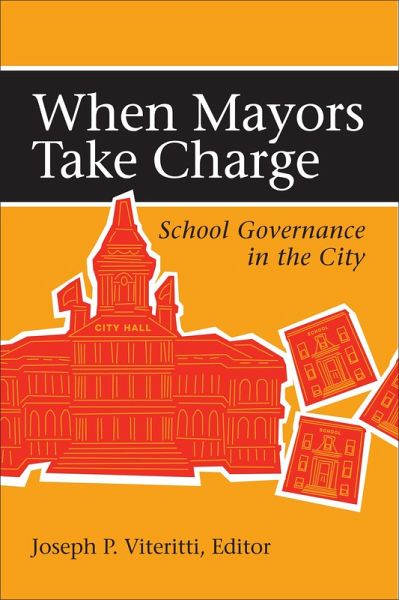
Large urban school systems have been the weakest link in American education, driving middle-class families into the suburbs while contributing mightily to the racial learning gap. Activist mayors in several major cities have responded by taking control of their public schools. When Mayors Take Charge is the most up-to-date assessment available on this phenomenon. It brings together the topic's leading experts to analyze the factors and people driving the trend, its achievements and shortcomings, its prospects for the future, and ways to improve it. Part One of the book assesses the results of mayoral control nationwide. The second section details the experience in three key cities: Boston and Chicago, the major prototypes for mayoral control, and Detroit, where mayoral control ended in disaster. The final section provides the first in-depth examination of New York City, where the law installing mayoral control sunsets in 2009. Viteritti's opening essay and postscript frame the analysis to shed light on the significance and limitations of governance reform. Contributors include Clara Hemphill (formerly NewYork Newsday), Jeffrey R. Henig (Columbia University), Michael Kirst (Stanford University), John Portz (Northeastern University), Diane Ravitch (NYU),Wilbur C. Rich (Wellesley College), Robert Schwartz (Harvard University), Dorothy Shipps (Baruch College), and Kenneth K.Wong (Brown University).