1,99 €
1,99 €
inkl. MwSt.
Sofort per Download lieferbar

0 °P sammeln
1,99 €
Als Download kaufen
1,99 €
inkl. MwSt.
Sofort per Download lieferbar
0 °P sammeln
Jetzt verschenken
Alle Infos zum eBook verschenken
1,99 €
inkl. MwSt.
Sofort per Download lieferbar
Alle Infos zum eBook verschenken
0 °P sammeln

Andere Kunden interessierten sich auch für
") Burn, Witch, Burn! (eBook, ePUB)1,99 €
Burn, Witch, Burn! (eBook, ePUB)1,99 €") Frank Reade, Jr., with his new steam man in Mexico or, hot work among the greasers (eBook, ePUB)1,99 €
Frank Reade, Jr., with his new steam man in Mexico or, hot work among the greasers (eBook, ePUB)1,99 €") The Little Old Lady Who Broke All the Rules (eBook, ePUB)6,99 €
The Little Old Lady Who Broke All the Rules (eBook, ePUB)6,99 €") The Man Who Wasn't There (eBook, ePUB)2,99 €
The Man Who Wasn't There (eBook, ePUB)2,99 €") The Man Who Wasn't There (eBook, ePUB)8,99 €
The Man Who Wasn't There (eBook, ePUB)8,99 €") The Witness Who Wasn't There (eBook, ePUB)4,49 €
The Witness Who Wasn't There (eBook, ePUB)4,49 €") The Little Old Lady Who Broke All the Rules (eBook, ePUB)9,98 €
The Little Old Lady Who Broke All the Rules (eBook, ePUB)9,98 €





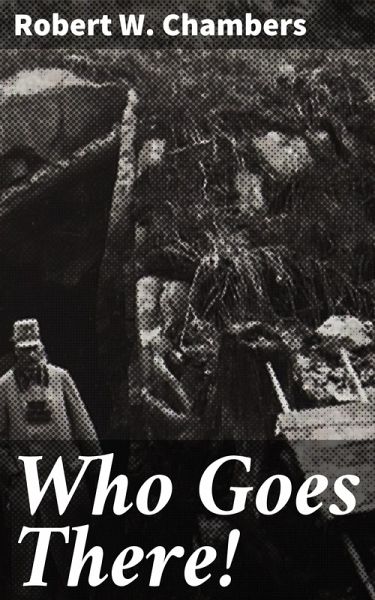
In "Who Goes There!", Robert W. Chambers crafts a haunting narrative that delves deep into the psyche of horror, enveloping readers in an atmosphere of dread and suspense. Structured as a collection of interconnected stories, Chambers employs a lyrical prose style that intertwines elegant imagery with chilling realism, placing it firmly within the fin-de-siv®cle literary context that explored the boundaries between the known and the unknown. This work mirrors the uncertainties of the turn of the 20th century, exploring themes of identity, existential dread, and the eerie potential of the supernatural, thus standing as a pivotal contribution to the genre of weird fiction. Chambers, an influential figure in the literary world, was heavily influenced by the artistic movements of his time, particularly the Symbolist movement which underscored emotive expression and aesthetic exploration. His background as a painter and his fascination with the esoteric and the macabre converged in this collection, allowing him to articulate the unsettled nature of his contemporary society while also reflecting his own existential inquiries. This intersection of art and literature underpins his innovative narrative approach, marking him as a precursor to later horror luminaries. Readers who appreciate introspective psychological horror and rich, atmospheric storytelling will find "Who Goes There!" to be an essential addition to their literary repertoire. Chambers'Äô masterful ability to evoke fear through suggestion rather than explicit violence invites thoughtful contemplation, making this work not only a pleasure to read but also an enduring study of the darker aspects of human nature.
Dieser Download kann aus rechtlichen Gründen nur mit Rechnungsadresse in A, B, BG, CY, CZ, D, DK, EW, E, FIN, F, GR, H, IRL, I, LT, L, LR, M, NL, PL, P, R, S, SLO, SK ausgeliefert werden.