36,95 €
inkl. MwSt.
Sofort per Download lieferbar
18 °P sammeln

Andere Kunden interessierten sich auch für
") Why Kids Can't Read (eBook, ePUB)36,95 €
Why Kids Can't Read (eBook, ePUB)36,95 €") The Empower Program, K-2 (eBook, PDF)26,95 €
The Empower Program, K-2 (eBook, PDF)26,95 €") A Creative Approach to Teaching Spelling: The what, why and how of teaching spelling, starting with phonics (eBook, PDF)14,95 €
A Creative Approach to Teaching Spelling: The what, why and how of teaching spelling, starting with phonics (eBook, PDF)14,95 €") Inspiring Children to Read and Write for Pleasure (eBook, PDF)33,95 €
Inspiring Children to Read and Write for Pleasure (eBook, PDF)33,95 €") Elementary Science Methods (eBook, PDF)25,95 €
Elementary Science Methods (eBook, PDF)25,95 €") Children and Parents Enjoying Reading (eBook, PDF)55,95 €
Children and Parents Enjoying Reading (eBook, PDF)55,95 €") Developing Self-Confidence in Young Writers (eBook, PDF)14,95 €
Developing Self-Confidence in Young Writers (eBook, PDF)14,95 €

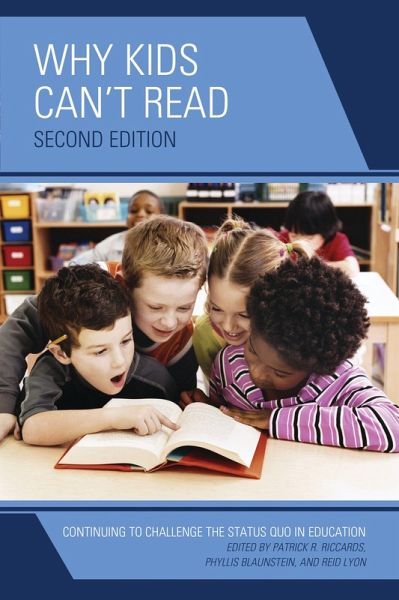
Nearly forty percent of all fourth graders in this country cannot read at grade level, and this number rises to sixty percent for children coming from poor families. This gap in learning increases as students go through grade school and is a primary reason for school failure. Ironically, this problem comes even after comprehensive research demonstrates that nearly all children can learn to read if taught using proven-effective instruction.
Here, the authors describe the principles of this research in language that non-educators can understand and educators can use. It discusses how to recognize whether the research on reading is being used appropriately, and if not, how to make that happen. Through the eyes of parents and educators who have succeeded in their own struggles to change the educational system, the book provides the reader with the tools and knowledge for transforming the way reading is taught in their children's classrooms. This book takes the reader step-by-step through an understanding of the research on reading and ways in which a single, determined person can make a difference in the learning ability of every student in our nation's schools.
Part One is a series of chapters written by individuals who discuss what they experienced during these battles and what made them successful. Part Two is written by a series of experts who describe how they have overcome the challenges involved in creating widespread change in school systems. This second edition also includes information on Common Core State Standards, increased testing and accountability efforts, and related policy issues that directly impact how children learn to read. The appendix is filled with resources-people, places, sample tools, a glossary and bibliography to help the reader. Some key features of this book include:
Easy to understand descriptions of researchFirst-person stories of how they have helped teach their kids to readClear understanding of scientifically based reading and how it can be applied to the classroomSummary of reading-related Common Core State StandardsSample tools for parent advocatesResource lists of government officials, organizations that can help with reading efforts
Here, the authors describe the principles of this research in language that non-educators can understand and educators can use. It discusses how to recognize whether the research on reading is being used appropriately, and if not, how to make that happen. Through the eyes of parents and educators who have succeeded in their own struggles to change the educational system, the book provides the reader with the tools and knowledge for transforming the way reading is taught in their children's classrooms. This book takes the reader step-by-step through an understanding of the research on reading and ways in which a single, determined person can make a difference in the learning ability of every student in our nation's schools.
Part One is a series of chapters written by individuals who discuss what they experienced during these battles and what made them successful. Part Two is written by a series of experts who describe how they have overcome the challenges involved in creating widespread change in school systems. This second edition also includes information on Common Core State Standards, increased testing and accountability efforts, and related policy issues that directly impact how children learn to read. The appendix is filled with resources-people, places, sample tools, a glossary and bibliography to help the reader. Some key features of this book include:
Easy to understand descriptions of researchFirst-person stories of how they have helped teach their kids to readClear understanding of scientifically based reading and how it can be applied to the classroomSummary of reading-related Common Core State StandardsSample tools for parent advocatesResource lists of government officials, organizations that can help with reading efforts