1,99 €
inkl. MwSt.
Sofort per Download lieferbar
0 °P sammeln

Andere Kunden interessierten sich auch für
") Witch Stories (eBook, ePUB)0,99 €
Witch Stories (eBook, ePUB)0,99 €") The ninth vibration and other stories (eBook, ePUB)0,49 €
The ninth vibration and other stories (eBook, ePUB)0,49 €") Jessie Trim (eBook, ePUB)0,49 €
Jessie Trim (eBook, ePUB)0,49 €") The Troll Garden, and Selected Stories (eBook, ePUB)0,49 €
The Troll Garden, and Selected Stories (eBook, ePUB)0,49 €") The Point of View (eBook, ePUB)0,49 €
The Point of View (eBook, ePUB)0,49 €") The Bell-Ringer of Angel's, and Other Stories (eBook, ePUB)0,49 €
The Bell-Ringer of Angel's, and Other Stories (eBook, ePUB)0,49 €") Trent's Trust, and Other Stories (eBook, ePUB)0,49 €
Trent's Trust, and Other Stories (eBook, ePUB)0,49 €

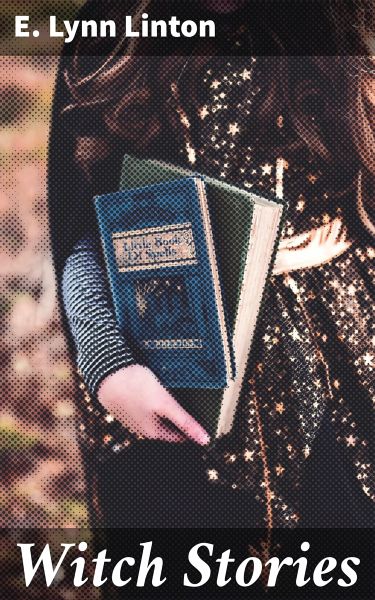
In "Witch Stories," E. Lynn Linton intricately weaves a collection of narratives that delve into the profound complexities of societal constructs surrounding witchcraft and femininity. Employing a compelling blend of Gothic sensibilities and keen social commentary, Linton crafts tales that explore the intersections between power, gender, and the superstition of her time. The literary style is marked by lush descriptions and psychological depth, inviting readers to ponder the impact of witchcraft on personal and communal identities within Victorian society, illustrating both fear and fascination with the so-called 'other.' E. Lynn Linton was a prominent figure in the 19th-century literary scene, known for her progressive views on women's rights and her critiques of social norms. Her own experiences as a woman writer in a largely patriarchal world may have invigorated her candid exploration of witchcraft as both a metaphor for female empowerment and an examination of societal oppression. Linton's background as an outspoken advocate for women's roles in literature reflects her intention to challenge the prevailing stereotypes of women as either innocent victims or malevolent figures. "Witch Stories" serves as a vital exploration of hidden narratives that challenges readers to reconsider modern interpretations of power, femininity, and societal judgment. This book is highly recommended for scholars, feminists, and avid readers of Gothic literature, offering a rich tapestry of stories that resonate beyond their era, inviting contemporary reflection on enduring themes. In this enriched edition, we have carefully created added value for your reading experience: - A comprehensive Introduction outlines these selected works' unifying features, themes, or stylistic evolutions. - A Historical Context section situates the works in their broader era-social currents, cultural trends, and key events that underpin their creation. - A concise Synopsis (Selection) offers an accessible overview of the included texts, helping readers navigate plotlines and main ideas without revealing critical twists. - A unified Analysis examines recurring motifs and stylistic hallmarks across the collection, tying the stories together while spotlighting the different work's strengths. - Reflection questions inspire deeper contemplation of the author's overarching message, inviting readers to draw connections among different texts and relate them to modern contexts. - Lastly, our hand-picked Memorable Quotes distill pivotal lines and turning points, serving as touchstones for the collection's central themes.
Dieser Download kann aus rechtlichen Gründen nur mit Rechnungsadresse in A, B, BG, CY, CZ, D, DK, EW, E, FIN, F, GR, H, IRL, I, LT, L, LR, M, NL, PL, P, R, S, SLO, SK ausgeliefert werden.