25,95 €
inkl. MwSt.
Sofort per Download lieferbar
13 °P sammeln

Andere Kunden interessierten sich auch für
") Women in Rock, Women in Romanticism (eBook, ePUB)41,95 €
Women in Rock, Women in Romanticism (eBook, ePUB)41,95 €") Becoming Wollstonecraft (eBook, ePUB)42,95 €
Becoming Wollstonecraft (eBook, ePUB)42,95 €") The Works of Mary Wollstonecraft Vol 1 (eBook, ePUB)55,95 €
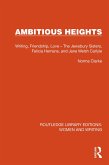
The Works of Mary Wollstonecraft Vol 1 (eBook, ePUB)55,95 €") Ambitious Heights (eBook, ePUB)27,95 €
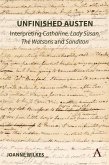
Ambitious Heights (eBook, ePUB)27,95 € Unfinished Austen: Interpreting "Catharine", "Lady Susan", "The Watsons" and "Sanditon" (eBook, ePUB)25,95 €
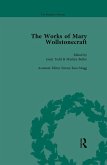
") The Works of Mary Wollstonecraft Vol 6 (eBook, ePUB)55,95 €
The Works of Mary Wollstonecraft Vol 6 (eBook, ePUB)55,95 €") Mikhail Bakhtin (eBook, ePUB)42,95 €
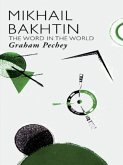
Mikhail Bakhtin (eBook, ePUB)42,95 €
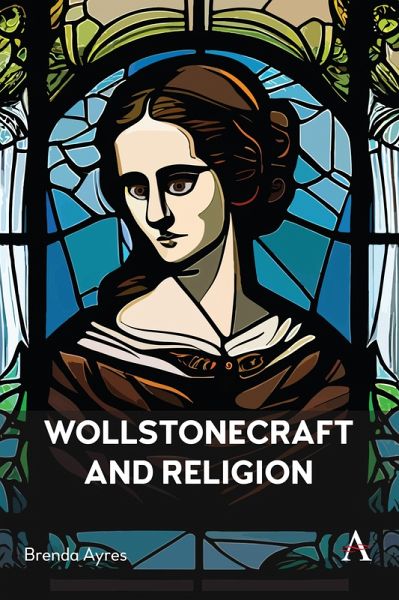
Ever since Godwin announced to the world in Memoirs that Wollstonecraft had had little use for religion, most biographers, scholars, historians and readers have regarded her as an apostate. Further, the existing scholarly texts fail to demonstrate the pervasiveness of biblical references in A Vindication of the Rights of Woman. The Pickering & Chatto version cites 42 scriptures; the Norton Critical Edition, 41; the Longman Cultural Edition, 50; and Broadview, 92. The true tally of scriptural references approaches over 1,100 as identified in this study. Furthermore, scriptural references are rife throughout all her publications and in many of her letters, and not just those written in her youth, contradicting Godwin's implication that she abandoned her faith by 1787.
Wollstonecraft's biblical allusions, besides sheer volume, are noteworthy because they gave women a biblical basis upon which to contend for better education and occupational opportunities as well as for legal and political independence. That the arguments were couched in biblical rhetoric most likely contributed to their initial reception and tolerance of what were actually incendiary ideas and searing social criticism. Nevertheless, they failed to effect any apparent political change either in France or in England as Wollstonecraft had hoped. However, they would be wielded by suffragists in the next century to argue for equal opportunities for women. By the second-wave feminist movement in the 1900s and definitely by the third in the 1990s, Wollstonecraft was hailed the Mother of Feminism but also deemed not radical enough because of her biblical renderings of womanhood. It seems that in the twenty-first century, more recent publications, including several biofictions, have reinvented Wollstonecraft as a nonbeliever, lesbian and moral rebel, none of which accurately represent her life or works.
The recognition and analysis of biblical underpinnings in Wollstonecraft and Religion not only of Rights of Woman but also of her other publications and letters propose a new consideration. Ayres's chapters that accompany the scripturally annotated text of Rights of Woman furnish biographical and historical context that offer fresh perspectives about Wollstonecraft's religious convictions and faith.
Wollstonecraft's biblical allusions, besides sheer volume, are noteworthy because they gave women a biblical basis upon which to contend for better education and occupational opportunities as well as for legal and political independence. That the arguments were couched in biblical rhetoric most likely contributed to their initial reception and tolerance of what were actually incendiary ideas and searing social criticism. Nevertheless, they failed to effect any apparent political change either in France or in England as Wollstonecraft had hoped. However, they would be wielded by suffragists in the next century to argue for equal opportunities for women. By the second-wave feminist movement in the 1900s and definitely by the third in the 1990s, Wollstonecraft was hailed the Mother of Feminism but also deemed not radical enough because of her biblical renderings of womanhood. It seems that in the twenty-first century, more recent publications, including several biofictions, have reinvented Wollstonecraft as a nonbeliever, lesbian and moral rebel, none of which accurately represent her life or works.
The recognition and analysis of biblical underpinnings in Wollstonecraft and Religion not only of Rights of Woman but also of her other publications and letters propose a new consideration. Ayres's chapters that accompany the scripturally annotated text of Rights of Woman furnish biographical and historical context that offer fresh perspectives about Wollstonecraft's religious convictions and faith.
Dieser Download kann aus rechtlichen Gründen nur mit Rechnungsadresse in A, D ausgeliefert werden.