
39,95 €
39,95 €
inkl. MwSt.
Sofort per Download lieferbar

20 °P sammeln
39,95 €
Als Download kaufen
39,95 €
inkl. MwSt.
Sofort per Download lieferbar
20 °P sammeln
Jetzt verschenken
Alle Infos zum eBook verschenken
39,95 €
inkl. MwSt.
Sofort per Download lieferbar
Alle Infos zum eBook verschenken
20 °P sammeln

Andere Kunden interessierten sich auch für
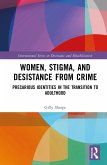
") Women, Stigma, and Desistance from Crime (eBook, PDF)39,95 €
Women, Stigma, and Desistance from Crime (eBook, PDF)39,95 €") Mothering and Desistance in Re-Entry (eBook, ePUB)41,95 €
Mothering and Desistance in Re-Entry (eBook, ePUB)41,95 €") Sexual Violence on Trial (eBook, ePUB)39,95 €
Sexual Violence on Trial (eBook, ePUB)39,95 €") International Responses to Gendered-Based Domestic Violence (eBook, ePUB)36,95 €
International Responses to Gendered-Based Domestic Violence (eBook, ePUB)36,95 €") Police-Citizen Relations Across the World (eBook, ePUB)45,95 €
Police-Citizen Relations Across the World (eBook, ePUB)45,95 €") Race, Recognition and Retribution in Contemporary Youth Justice (eBook, ePUB)41,95 €
Race, Recognition and Retribution in Contemporary Youth Justice (eBook, ePUB)41,95 €") Between Systems and Violence (eBook, ePUB)19,95 €
Between Systems and Violence (eBook, ePUB)19,95 €



How do young women negotiate their identity in the shadow of a criminal past? What expectations can these women have and what constraints do they face in embracing change and reform?
In this new book, Gilly Sharpe returns to the group of women interviewed in her bestselling book Offending Girls, to ask these questions and more. Building on wide-ranging interviews with young adult women who have experienced a highly punitive climate in both youth justice and welfare policy, this book analyses their vivid personal accounts of stigmatisation and devaluation as former lawbreakers, welfare claimants and mothers, and examines their gendered transitions from youth criminalisation into adulthood. Women, Stigma, and Desistance from Crime exposes how stigma, which is rooted in structural inequality and thrives in societies with deep economic and social divisions, devalues working-class and marginalised women and diminishes their lives. It offers a unique analysis of how criminal stigma is shaped by class-based condescension, welfare inaction and school-based disciplinary punishment, and reveals how stigma is reproduced over time across education, welfare, and penal institutions.
Meticulously researched and the first study to examine how the lives of young women previously enmeshed in the youth justice system unfold as they transition to adulthood, this book will be of interest to scholars and students of criminology and criminal justice, sociology, social work, social policy, gender and youth studies, and to practitioners and policy-makers in these fields.
In this new book, Gilly Sharpe returns to the group of women interviewed in her bestselling book Offending Girls, to ask these questions and more. Building on wide-ranging interviews with young adult women who have experienced a highly punitive climate in both youth justice and welfare policy, this book analyses their vivid personal accounts of stigmatisation and devaluation as former lawbreakers, welfare claimants and mothers, and examines their gendered transitions from youth criminalisation into adulthood. Women, Stigma, and Desistance from Crime exposes how stigma, which is rooted in structural inequality and thrives in societies with deep economic and social divisions, devalues working-class and marginalised women and diminishes their lives. It offers a unique analysis of how criminal stigma is shaped by class-based condescension, welfare inaction and school-based disciplinary punishment, and reveals how stigma is reproduced over time across education, welfare, and penal institutions.
Meticulously researched and the first study to examine how the lives of young women previously enmeshed in the youth justice system unfold as they transition to adulthood, this book will be of interest to scholars and students of criminology and criminal justice, sociology, social work, social policy, gender and youth studies, and to practitioners and policy-makers in these fields.
Dieser Download kann aus rechtlichen Gründen nur mit Rechnungsadresse in A, B, BG, CY, CZ, D, DK, EW, E, FIN, F, GR, HR, H, IRL, I, LT, L, LR, M, NL, PL, P, R, S, SLO, SK ausgeliefert werden.
'Gilly Sharpe's book explores the lives and especially the struggles of young women who had early experience with the justice system. The volume is accessible and highly readable, but represents a significant advance in our understanding of complex mechanisms associated with 'desistance' processes and the life course experiences of marginalized women more generally. It is appealing to focus on individual level efforts to forge a better life (e.g., changes in motivation), but Sharpe's longitudinal follow-up of a sample of women first interviewed as teens shows the ways in which policies and institutional practices often limit opportunities across many aspects of women's lives. The concept of stigmatization organizes the analysis and makes tangible punitive and inequality-amplifying processes that are often conceptualized as mere abstractions. Women, Stigma and Desistance is especially effective in highlighting the ways in which class, gender, and even brief levels of early justice system contact combine to affect economic viability, housing, motherhood, and a host of other formal and informal ties that play a role in the successful transition to adulthood.'
Professor Peggy Giordano, Bowling Green State University, USA
The issue of women and desistance has attracted relatively little attention over the years. Retracing 36 women who were interviewed between 2005-6 Women, Stigma and Desistance from Crime offers a highly original and compelling perspective on criminalised women's navigations through stigma, poverty, abuse at the hands of men, alongside additional challenges of child-care responsibilities, with little support from partners or the state, when they were reinterviewed some seven years later. This is a study and story of real importance in which Gilly Sharpe reveals a very long shadow of criminalisation and captures the different ways in which the women have struggled with meaningless penal interference in their lives, without practical or emotional support. The book should be read by academics, policy-makers and practitioners alike. It inspires us to do better!
Professor Loraine Gelsthorpe, Institute of Criminology, University of Cambridge, UK
Criminalised young women are too often the forgotten minority inside the criminal justice system and are equally neglected by the academic scholarship around desistance from crime. Thankfully, with this tour de force study, Sharpe illuminates the complex challenges faced by women on the margins in navigating pathways out of punishment cycles.
Professor Shadd Maruna, author of Making Good: How Ex-Convicts Reform and Rebuild Their Lives
Professor Peggy Giordano, Bowling Green State University, USA
The issue of women and desistance has attracted relatively little attention over the years. Retracing 36 women who were interviewed between 2005-6 Women, Stigma and Desistance from Crime offers a highly original and compelling perspective on criminalised women's navigations through stigma, poverty, abuse at the hands of men, alongside additional challenges of child-care responsibilities, with little support from partners or the state, when they were reinterviewed some seven years later. This is a study and story of real importance in which Gilly Sharpe reveals a very long shadow of criminalisation and captures the different ways in which the women have struggled with meaningless penal interference in their lives, without practical or emotional support. The book should be read by academics, policy-makers and practitioners alike. It inspires us to do better!
Professor Loraine Gelsthorpe, Institute of Criminology, University of Cambridge, UK
Criminalised young women are too often the forgotten minority inside the criminal justice system and are equally neglected by the academic scholarship around desistance from crime. Thankfully, with this tour de force study, Sharpe illuminates the complex challenges faced by women on the margins in navigating pathways out of punishment cycles.
Professor Shadd Maruna, author of Making Good: How Ex-Convicts Reform and Rebuild Their Lives