Sie sind bereits eingeloggt. Klicken Sie auf 2. tolino select Abo, um fortzufahren.
Bitte loggen Sie sich zunächst in Ihr Kundenkonto ein oder registrieren Sie sich bei bücher.de, um das eBook-Abo tolino select nutzen zu können.
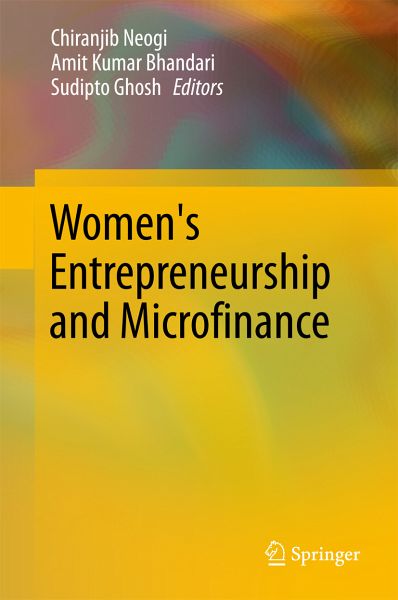
Reconceptualizes the dynamics of the relationship between women's empowerment, microfinance, and entrepreneurship in India Presents the investigation of mission drift phenomenon in microfinance in India Understands challenges and opportunities of women entrepreneurship
Reconceptualizes the dynamics of the relationship between women's empowerment, microfinance, and entrepreneurship in India
Presents the investigation of mission drift phenomenon in microfinance in India
Understands challenges and opportunities of women entrepreneurship
Dieser Download kann aus rechtlichen Gründen nur mit Rechnungsadresse in A, B, BG, CY, CZ, D, DK, EW, E, FIN, F, GR, HR, H, IRL, I, LT, L, LR, M, NL, PL, P, R, S, SLO, SK ausgeliefert werden.
Die Herstellerinformationen sind derzeit nicht verfügbar.
Autorenporträt
Chiranjib Neogi is a Retired Associate Scientist at the Economic Research Unit of Indian Statistical Institute, Kolkata. He has been working on the area of productivity and efficiency for many years and has published a number of research papers on this issue in national and international journals. He has published a book "India's New Economy" from Palgrave, UK, written jointly with Professor Jati K. Sengupta of University of California, Santa Barbara. He has also edited a book on "Productivity and Efficiency", jointly with Professor Ranjan Ghosh of IIM Kolkata, and the book was published by Macmillan, India. He has also contributed papers in many edited books on the contemporary issues of the Indian economy. He was visiting Research Fellow at the Institute of Developing Economies, Tokyo, Japan in the year 1998-99 and at the Korea Institute for International Economic Policy, Seoul, in 2009. Dr. Amit K Bhandari is presently an Assistant Professor in Economics atRishi Bankim Chandra Evening College. He has been a Research Fellow at IZA - Institute of Labour Economics, Bonn, Germany. He is a Ph D in Economics from the University of Kalyani. Formerly he was a Lecturer in Economics and Finance at the Indian Institute of Social Welfare and Business Management (IISWBM). His works have published in reputed journals and books. He has a broad interdisciplinary research interest in social, economic and financial issues. His work was funded by Indian Council of Social Science Research and University Grants Commission, India. Sudipto Ghosh is a Ph.D in Sociology, having expertise in the Micro finance, Entrepreneurship, Planning and Livelihood. Being a Planning expert in the Government sector, he is having ten years experience in the Urban and Rural Sector. He is involved in the preparation of City Planning, various development project reports for local government's bodies. He is also a SEBI Resource person working for the Financial Literacy programme and involved in advising organization like Amystar Innovations, Kalyani Institute of Applied Research Training & Development (KIARTD) etc in the social development.
Inhaltsangabe
Chapter 1: Introduction.- SECTION I: Women Empowerment.- Chapter 2: Women Empowerment in India (by Chaiti Sharma Biswas).- Chapter 3: Measuring Women Empowerment in the Household Sector: A Generalised Index and an Application to Indian Households (by Subhendu Chaktabarti).- Chapter 4: Traditional Institutions and Female Beneficiaries of Mahatma Gandhi National Rural Employment Guarantee Act (MGNREGA) in West Bengal (by Arghya Kusum Mukherjee & Amit Kundu).- Chapter 5: Empowerment of Women through Public Programmes in Rural West Bengal: A Study on National Rural Livelihood Mission in a block of Purulia (by Tithi Bose and Archita Ghosh).- Chapter 6: Non-farm Employment among Rural Women: Trends and determinants (by Aparajita Dhara & Biswajit Chatterjee).- SECTION II: Microfinance in India.- Chapter 7: Efficiency and Mission Drift - Debate Revisited (by Chandralekha Ghosh & Samapti Guha).- Chapter 8: Microfinance andHuman Development: A cross generation study (by Sharmishtha Banerjee & Arijita Dutta).- Chapter 9: Microfinance for Women Owned Small Business in India: Challenges and Opportunities (by Avijit Brahmachary).- SECTION III: Microfinance and Women Entrepreneurship.- Chapter 10: Role of Microfinance in Empowering Rural Women Entrepreneurs in Nadia District of West Bengal (by Bhajan Chandra Barman).- Chapter 11: Going Through the New Avenue of Life: A Study on Factors Working Behind Entrepreneurship Development through Self Help Group (by Kallol Das).- Chapter 12: Effectiveness of Women Entrepreneurs: A case based analysis (by Sanchita Ghatak & Mahima Sharma).- Chapter 13: Access to Finance, Entrepreneurship and Empowerment: A Case Study (by Chirajib Neogi and Sudipto Ghosh).- Chapter 14: Discrimination against Women Entrepreneurs in Access to Credit: An Empirical Analysis (by Rabin Majumdar & Amit Bhandari).
Chapter 1: Introduction.- SECTION I: Women Empowerment.- Chapter 2: Women Empowerment in India (by Chaiti Sharma Biswas).- Chapter 3: Measuring Women Empowerment in the Household Sector: A Generalised Index and an Application to Indian Households (by Subhendu Chaktabarti).- Chapter 4: Traditional Institutions and Female Beneficiaries of Mahatma Gandhi National Rural Employment Guarantee Act (MGNREGA) in West Bengal (by Arghya Kusum Mukherjee & Amit Kundu).- Chapter 5: Empowerment of Women through Public Programmes in Rural West Bengal: A Study on National Rural Livelihood Mission in a block of Purulia (by Tithi Bose and Archita Ghosh).- Chapter 6: Non-farm Employment among Rural Women: Trends and determinants (by Aparajita Dhara & Biswajit Chatterjee).- SECTION II: Microfinance in India.- Chapter 7: Efficiency and Mission Drift - Debate Revisited (by Chandralekha Ghosh & Samapti Guha).- Chapter 8: Microfinance andHuman Development: A cross generation study (by Sharmishtha Banerjee & Arijita Dutta).- Chapter 9: Microfinance for Women Owned Small Business in India: Challenges and Opportunities (by Avijit Brahmachary).- SECTION III: Microfinance and Women Entrepreneurship.- Chapter 10: Role of Microfinance in Empowering Rural Women Entrepreneurs in Nadia District of West Bengal (by Bhajan Chandra Barman).- Chapter 11: Going Through the New Avenue of Life: A Study on Factors Working Behind Entrepreneurship Development through Self Help Group (by Kallol Das).- Chapter 12: Effectiveness of Women Entrepreneurs: A case based analysis (by Sanchita Ghatak & Mahima Sharma).- Chapter 13: Access to Finance, Entrepreneurship and Empowerment: A Case Study (by Chirajib Neogi and Sudipto Ghosh).- Chapter 14: Discrimination against Women Entrepreneurs in Access to Credit: An Empirical Analysis (by Rabin Majumdar & Amit Bhandari).
Es gelten unsere Allgemeinen Geschäftsbedingungen: www.buecher.de/agb
Impressum
www.buecher.de ist ein Internetauftritt der buecher.de internetstores GmbH
Geschäftsführung: Monica Sawhney | Roland Kölbl | Günter Hilger
Sitz der Gesellschaft: Batheyer Straße 115 - 117, 58099 Hagen
Postanschrift: Bürgermeister-Wegele-Str. 12, 86167 Augsburg
Amtsgericht Hagen HRB 13257
Steuernummer: 321/5800/1497
USt-IdNr: DE450055826