Sie sind bereits eingeloggt. Klicken Sie auf 2. tolino select Abo, um fortzufahren.
Bitte loggen Sie sich zunächst in Ihr Kundenkonto ein oder registrieren Sie sich bei bücher.de, um das eBook-Abo tolino select nutzen zu können.
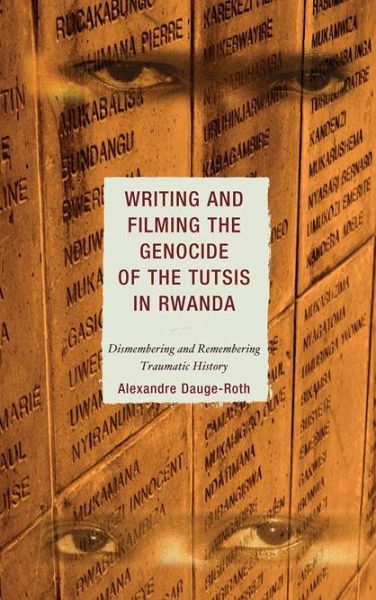
Writing and Filming the Genocide of the Tutsis in Rwanda: Dismembering and Remembering Traumatic History is an innovative work in Francophone and African studies that examines a wide range of responses to the 1994 genocide of the Tutsis in Rwanda. From survivor testimonies, to novels by African authors, to films such as Hotel Rwanda and Sometimes in April, the arts of witnessing are varied, comprehensive, and compelling. Alexandre Dauge-Roth compares the specific potential and the limits of each medium to craft unique responses to the genocide and instill in us its haunting legacy. In the wake…mehr
Writing and Filming the Genocide of the Tutsis in Rwanda: Dismembering and Remembering Traumatic History is an innovative work in Francophone and African studies that examines a wide range of responses to the 1994 genocide of the Tutsis in Rwanda. From survivor testimonies, to novels by African authors, to films such as Hotel Rwanda and Sometimes in April, the arts of witnessing are varied, comprehensive, and compelling. Alexandre Dauge-Roth compares the specific potential and the limits of each medium to craft unique responses to the genocide and instill in us its haunting legacy. In the wake of genocide, urgent questions arise: How do survivors both claim their shared humanity and speak the radically personal and violent experience of their past? How do authors and filmmakers make inconceivable trauma accessible to a society that will always remain foreign to their experience? How are we transformed by the genocide through these various modes of listening, viewing, and reading?
Die Herstellerinformationen sind derzeit nicht verfügbar.
Autorenporträt
Alexandre Dauge-Roth is associate professor of French at Bates College.
Inhaltsangabe
INTRODUCTION 1. Excess of Memory? 2. Historical Preamble to Set the Scene 3. Testimony, Literature, and Film as Vectors of Memory PART ONE: The Testimonial Encounter 4. The Hospitality of Listening as Interruption 5. Staging the Ob-Scene 6. Becoming Heirs and Going on Haunted PART TWO: Dismembering Remembering: "Rwanda: Writing as a Duty to Remember" 7. We Came, We Saw... We Listened 8. Belated Witnessing and Preemptive Positioning 9. Between Highlights and Shadows: Tadjo's Entries 10. Writing as Haunting Pollination: Lamko's Butterfly 11. Polyvocal Dismembering: Diop's Remembering of Murambi PART THREE: Screening Memory and (Un)Framing Forgetting: Filming Genocide and its Aftermath in Rwanda 12. No Neutral Shooting 13. Close-up on some Recurrent Facts and Figures 14. A Pedagogy Against Forgetting that Sometimes Forgets Itself 15. Historical and Contextual Trompe-l'il 16. Ob-Scene Off-Screened: A Genocide Off-Camera 17. The Heir or the Return of the Off-Screened EPILOGUE: On Turning the Page 18. Testimony, Memory, and Reconciliation in the Era of Gacaca
Es gelten unsere Allgemeinen Geschäftsbedingungen: www.buecher.de/agb
Impressum
www.buecher.de ist ein Internetauftritt der buecher.de internetstores GmbH
Geschäftsführung: Monica Sawhney | Roland Kölbl | Günter Hilger
Sitz der Gesellschaft: Batheyer Straße 115 - 117, 58099 Hagen
Postanschrift: Bürgermeister-Wegele-Str. 12, 86167 Augsburg
Amtsgericht Hagen HRB 13257
Steuernummer: 321/5800/1497
USt-IdNr: DE450055826