Sie sind bereits eingeloggt. Klicken Sie auf 2. tolino select Abo, um fortzufahren.
Bitte loggen Sie sich zunächst in Ihr Kundenkonto ein oder registrieren Sie sich bei bücher.de, um das eBook-Abo tolino select nutzen zu können.
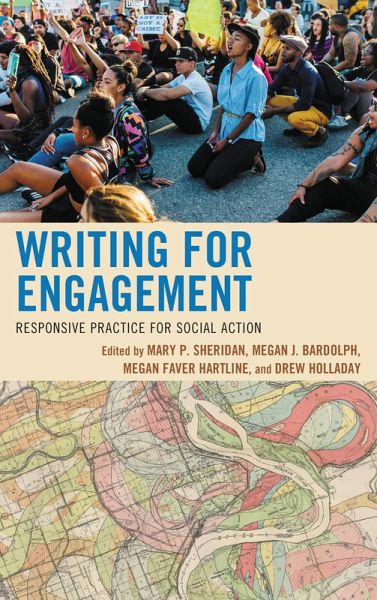
Engagement is trendy. Although paired most often with community, diverse invocations of engagement have gained cache, capturing longstanding shifts toward new practices of knowledge making that both reflect and facilitate multiple ways of being an academic. Engagement functions as a gloss for these shifts-addressing more expansive understandings of where, how, and with whom we research, teach, and partner. This book examines these shifts, locating them within socio-economic trends within and beyond the higher educational landscape, with particular focus on how they have been enacted within the…mehr
Engagement is trendy. Although paired most often with community, diverse invocations of engagement have gained cache, capturing longstanding shifts toward new practices of knowledge making that both reflect and facilitate multiple ways of being an academic. Engagement functions as a gloss for these shifts-addressing more expansive understandings of where, how, and with whom we research, teach, and partner. This book examines these shifts, locating them within socio-economic trends within and beyond the higher educational landscape, with particular focus on how they have been enacted within the diverse subfields of writing studies. In so doing, this book provides concrete models for enacting these new responsive practices, thereby encouraging scholars to examine how they can facilitate writing for social action through taking positions, building relationships, and crossing boundaries.
Die Herstellerinformationen sind derzeit nicht verfügbar.
Autorenporträt
Mary P. Sheridan is professor of English at University of Louisville. Megan J. Bardolph is assistant professor of English at Penn State New Kensington. Megan Faver Hartline is the associate director of Community Learning at Trinity College. Drew Holladay is assistant professor of digital humanities at University of Maryland, Baltimore County.
Inhaltsangabe
Introduction Mary P. Sheridan Section 1: Taking Positions 1. Taking Action in the Age of Reaction: Constructing Architectures of Participation Linda Adler-Kassner 2. Engage, Respond, Advocate: Copyright in Context Dànielle DeVoss 3. The Figured Worlds of Digital Mediation in Schools Rachel Gramer 4. Witnessing Learning: Building Relationships between Past, Present, and Future Selves Bump Halbritter and Julie Lindquist 5. Imagining Pedagogical Engagement: On the Rhetorical Limits of Vulnerability Kellie Sharp-Hoskins 6. Police Use-of-Force Policy: Engagement and the Mediation/Negotiation of Responsibility in a Public Institutional Genre Michael Knievel 7. From Public Writing to Writing-in-Common: Community Literacy after the Public Sphere Stephen Schneider Afterword for Section 1: Taking Positions Drew Holladay Section 2: Building Relationships 8. The Rhetoric of Outrage: Responding through Memoir and Public History Shannon Carter and Donna Dunbar-Odom 9. Remixed Literacies and Radical Cooperation at Play in a Youth-Directed Media Project Londie T. Martin and Adela C. Licona 10. Enacting Confianza: Responsive Community Literacy Learning Research in Mexington, Kentucky Steven Alvarez 11. From the Center to the Sidelines: Responsive Leadership in a High School-College Writing Partnership Heather Lindenman 12. The SISTA Project: Literacy Outreach in Response to Community Needs David A. Jolliffe, Julia Paganelli-Martin, Daniele Cunningham, andShiloh Peters Afterword for Section 2: Building Relationships Megan Faver Hartline Section 3: Crossing Boundaries 13. Writing, Democracy, Activism: Palestine, Israel, and Community Publishing Steve Parks 14. Carceral Windows and the Promise of Literacy Patrick W. Berry 15. Habitus, Disposition, and Disruption in MOOCs: Developing Responsive Pedagogy at Scale Ben McCorkle, Cynthia L. Selfe, Kaitlin Clinnin, and Kay Halasek 16. Meeting Students Where They Are: Practicing Responsive Pedagogy Kaitlin Clinnin, Kay Halasek, Ben McCorkle, and Cynthia L. Selfe 17. Refugee Literacy Learning and Liminal Belonging: A Neoliberal Context of Diversity Stephanie Rae Larson 18. "Responsive Understanding" and Receptivity to Global Writing Research Christiane Donahue Afterword for Section 3: Crossing Boundaries Megan J. Bardolph
Introduction Mary P. Sheridan Section 1: Taking Positions 1. Taking Action in the Age of Reaction: Constructing Architectures of Participation Linda Adler-Kassner 2. Engage, Respond, Advocate: Copyright in Context Dànielle DeVoss 3. The Figured Worlds of Digital Mediation in Schools Rachel Gramer 4. Witnessing Learning: Building Relationships between Past, Present, and Future Selves Bump Halbritter and Julie Lindquist 5. Imagining Pedagogical Engagement: On the Rhetorical Limits of Vulnerability Kellie Sharp-Hoskins 6. Police Use-of-Force Policy: Engagement and the Mediation/Negotiation of Responsibility in a Public Institutional Genre Michael Knievel 7. From Public Writing to Writing-in-Common: Community Literacy after the Public Sphere Stephen Schneider Afterword for Section 1: Taking Positions Drew Holladay Section 2: Building Relationships 8. The Rhetoric of Outrage: Responding through Memoir and Public History Shannon Carter and Donna Dunbar-Odom 9. Remixed Literacies and Radical Cooperation at Play in a Youth-Directed Media Project Londie T. Martin and Adela C. Licona 10. Enacting Confianza: Responsive Community Literacy Learning Research in Mexington, Kentucky Steven Alvarez 11. From the Center to the Sidelines: Responsive Leadership in a High School-College Writing Partnership Heather Lindenman 12. The SISTA Project: Literacy Outreach in Response to Community Needs David A. Jolliffe, Julia Paganelli-Martin, Daniele Cunningham, andShiloh Peters Afterword for Section 2: Building Relationships Megan Faver Hartline Section 3: Crossing Boundaries 13. Writing, Democracy, Activism: Palestine, Israel, and Community Publishing Steve Parks 14. Carceral Windows and the Promise of Literacy Patrick W. Berry 15. Habitus, Disposition, and Disruption in MOOCs: Developing Responsive Pedagogy at Scale Ben McCorkle, Cynthia L. Selfe, Kaitlin Clinnin, and Kay Halasek 16. Meeting Students Where They Are: Practicing Responsive Pedagogy Kaitlin Clinnin, Kay Halasek, Ben McCorkle, and Cynthia L. Selfe 17. Refugee Literacy Learning and Liminal Belonging: A Neoliberal Context of Diversity Stephanie Rae Larson 18. "Responsive Understanding" and Receptivity to Global Writing Research Christiane Donahue Afterword for Section 3: Crossing Boundaries Megan J. Bardolph
Es gelten unsere Allgemeinen Geschäftsbedingungen: www.buecher.de/agb
Impressum
www.buecher.de ist ein Internetauftritt der buecher.de internetstores GmbH
Geschäftsführung: Monica Sawhney | Roland Kölbl | Günter Hilger
Sitz der Gesellschaft: Batheyer Straße 115 - 117, 58099 Hagen
Postanschrift: Bürgermeister-Wegele-Str. 12, 86167 Augsburg
Amtsgericht Hagen HRB 13257
Steuernummer: 321/5800/1497
USt-IdNr: DE450055826