2,99 €
2,99 €
inkl. MwSt.
Sofort per Download lieferbar

0 °P sammeln
2,99 €
Als Download kaufen
2,99 €
inkl. MwSt.
Sofort per Download lieferbar
0 °P sammeln
Jetzt verschenken
Alle Infos zum eBook verschenken
2,99 €
inkl. MwSt.
Sofort per Download lieferbar
Alle Infos zum eBook verschenken
0 °P sammeln

Andere Kunden interessierten sich auch für
") Tesla: Power and Light Screenplay (eBook, ePUB)2,99 €
Tesla: Power and Light Screenplay (eBook, ePUB)2,99 €") Merchant of Venice, CA Screenplay (eBook, ePUB)0,99 €
Merchant of Venice, CA Screenplay (eBook, ePUB)0,99 €") The Long Walk to Destiny (eBook, ePUB)3,99 €
The Long Walk to Destiny (eBook, ePUB)3,99 €") Prewriting Your Screenplay (eBook, ePUB)37,95 €
Prewriting Your Screenplay (eBook, ePUB)37,95 €") The Great Christmas Journey (eBook, ePUB)1,99 €
The Great Christmas Journey (eBook, ePUB)1,99 €") Blessed by the Best Surviving Addiction: A Spiritual Journey (eBook, ePUB)8,49 €
Blessed by the Best Surviving Addiction: A Spiritual Journey (eBook, ePUB)8,49 €") How Not To Write Female Characters (eBook, ePUB)0,00 €
How Not To Write Female Characters (eBook, ePUB)0,00 €


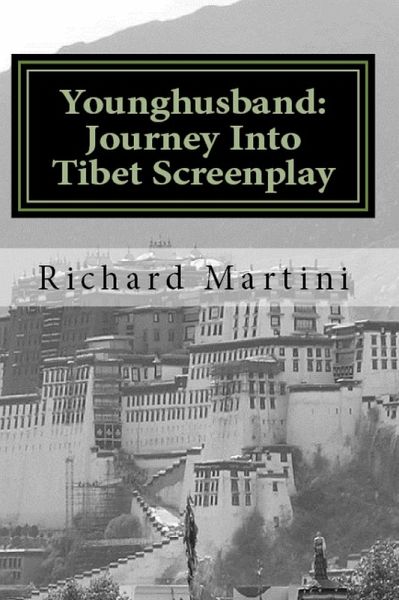
A screenplay for a feature film. In 1904 Francis Younghusband led a band of 10,000 into Tibet with unexpected consequences. Thousands of unarmed Tibetans were sent to defend their country, a mistaken volley resulted in thousands of deaths. The Tibetans fought valiantly, and nearly defeated the British regiment, resulting in the highest elevation of a battlefield in world history. Ultimately, Younghusband made it to Lhasa to negotiate a treaty, but the 13th Dalai Lama had fled. Back in London news of his massacre forced the UK to repudiate his treaty, which would have recognized Tibet for the world. As Younghusband left, he was given a statue of Buddha and asked to think fondly of the people he was leaving behind; it transformed him completely - he vowed to never pick up another gun, and upon his return to London created the "Council of World Religions." The statue rode upon his casket at his funeral. This script, after years of research, attempts to tell both sides of the story - the Tibetans and the British, against the backdrop of the Great Game, and the work of Rudyard Kipling ("Kim") whose prose inspired so many British explorers. This is a true story with a horrific outcome - however, the Chinese saw the British invasion as weakness, they invaded a few years later, but were ultimately repelled by the 13th Dalai Lama - this time arming his troops. Tibet stayed free until the Communist soldiers returned in 1949, and then ultimately forced the 14th Dalai Lama to flee into exile in 1959. This is a piece of history that I personally experience in Tibet, when the driver of our car pulled over to the side of the road and began to weep. I asked him what the problem was, and he said "3000 of my fellow Tibetans were massacred on this spot by the British in 1906." I was there a hundred years later - have discovered the statue of Buddha in the Geographic Society museum in London. I know how difficult it would be politically to tell this story in today's political and financial climate - so I am publishing it here so that people can read the story as I envisioned it. On the big screen. Only a little smaller. Enjoy. RM
Dieser Download kann aus rechtlichen Gründen nur mit Rechnungsadresse in A, B, CY, CZ, D, DK, EW, E, FIN, F, GR, H, IRL, I, LT, L, LR, M, NL, PL, P, R, S, SLO, SK ausgeliefert werden.