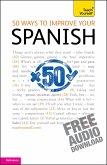
Do you have a working knowledge of Portuguese, but want to improve? Allow this book to come to your rescue and eliminate basic errors and slips of the pen. Each one of 50 top tips for improving your spoken and written Portuguese is presented and analyzed across a whole double page, with explanations as to where and why people sometimes go wrong. The tips are grouped into grammar, spelling, false friends, pronunciation and cultural faux pas sections. Polish your Portuguese with this brand new series from Teach Yourself - the No. 1 brand in language learning. 50 Ways to Improve your Portuguese…mehr
Do you have a working knowledge of Portuguese, but want to improve? Allow this book to come to your rescue and eliminate basic errors and slips of the pen. Each one of 50 top tips for improving your spoken and written Portuguese is presented and analyzed across a whole double page, with explanations as to where and why people sometimes go wrong. The tips are grouped into grammar, spelling, false friends, pronunciation and cultural faux pas sections. Polish your Portuguese with this brand new series from Teach Yourself - the No. 1 brand in language learning. 50 Ways to Improve your Portuguese touches all essential bases and is divided into the following easily digestible sections: Insights Instant help with common problems and quick tips for success, based on Manuela Cook and Helena Tostevin's many years of experience. Summaries Quick refreshers to help you remember the key facts. Grammar Easy-to-follow building blocks to give you a clear understanding. Pronunciation Don't sound like a tourist - polish your pronunciation before you go. Download our free app, Teach Yourself Library, from the App Store or Google Play to access the free audio.
Helena Tostevin teaches Portuguese at the University of Surrey. Manuela Cook has worked at the University of Wolverhampton and is the author of language courses and other materials for the learning of Portuguese.
Inhaltsangabe
* : Meet the authors * : Only got a minute? * : Only got 5 minutes? * : Only got 10 minutes? * : How to use this book * : Sounding right: pronunciation and spelling * : 1 Two by two … and golden silence (‘h’, ‘ch’, nh, ‘lh’ – what they stand for) * : 2 A hiss, a buzz and a shush (Sounds shown by ‘s’ and ‘z’) * : 3 Let’s slide, rock and roll (The values of ‘s’, ‘ss’, ‘r’, ‘rr’) * : 4 Play hard or not but mind the tail (Sounds spelt with ‘qu’, ‘g’, ‘gu’, ‘c’ and ‘ç’) * : 5 A DJ and a xylophone in a taxi (Spellings ‘t’, ‘d’, ‘x’ and their sounds) * : 6 Surf the sound waves (Nasal sounds) * : 7 High and low (Upper and lower case letters) * : 8 Beat the drums (Stress and graphic accent) * : 9 Make a difference (Accurate spelling) * : 10 Tune yourself to success (Subtle sounds) * : Getting the structure right * : 11a Eu viajo frequentemente entre o Brasil e Portugal I travel frequently between Brazil and Portugal (The definite article) * : 11b Eu vou passar as férias com a minha amiga I am going to spend my holidays with my friend (The definite article continued) * : 12 Cem carros em meia hora, que boa ideia! A hundred cars in half an hour, what a good idea! (The indefinite article) * : 13 Li o jornal durante a viagem I read the paper on the journey (Gender and nouns) * : 14 O que é isto? Um chapéu vermelho! What is this? A red hat! (Gender and different words) * : 15 Aquela estudante europeia tem uma irmã dentistaThat European female student has a sister who is a dentist (Changing masculine to feminine) * : 16 Eles compraram dez pães e dois guarda-chuvas azuisThey bought ten bread loaves and two blue umbrellas (Plurals) * 17 Bom dia e um dia bom!Good morning, and: a nice day! (Word order in nouns and adjectives) * : 18a A casa nova é bonita The new house looks nice (Gender and number agreement) * : 18b As portas estão fechadas e as janelas abertas The doors are closed and the windows open (Gender and number agreement) * : 19 No fim daquela rua, à direita At the bottom of that road, on your right (Contracted words and agreement) * : Possessives, personal and other pronouns – usage, agreement and word order * : 20 Meus senhores e minhas senhoras Ladies and gentlemen (Possessives and agreement) * : 21 Esta é uma das minhas malas This is one of my suitcases (Possessives with o/a and um/uma) * 22: Não saia sem o guarda-chuva Don’t go out without your umbrella (No possessives) * : 23 Falamos português We speak Portuguese (Use and omission of subject pronouns) * : 24a Muito prazer em conhecê-la Delighted to meet you (Object pronouns and word order) * : 24b Deram-lhe um presente e deram-no com prazer They gave him a present and they gave it with pleasure (More on object pronouns) * : 25 Estava calor, mas ontem não esteve It was hot then, but not yesterday (Past tenses) * : 26 Falaremos, quando você vier We shall talk, when you come (Future tenses) * : 27 Ao sair, encontrei um amigo As I left, I met a friend (Personal infinitive) * : 28 Faz muito sol It is very sunny (Impersonal sentences) * : 29 Está-se bem neste hotel It is comfortable at this hotel (The se format and its roles) * : 30 Como é que você se chama? What’s your name? (É que and word order) * : 31 Vocês gostam de música, não gostam? You like music, don’t you? (Tag questions) * : 32 Vamos para casa pelo parque We are going home through the park (Prepositions para and por) * 33: Fui de carro e também a cavalo I went by car and also on horseback (Prepositions de and a) * : Choosing the right words * 34a: Ele é do Rio de Janeiro He is from Rio de Janeiro (Ways of saying to be) * : 34b Ela está de férias no Algarve She is on holiday in the Algarve (More ways of saying to be) * : 35 Ela tem trinta anos She is thirty years old (Other expressions of being) * : 36 Tomo café todos os dias I have coffee every day (Not to have) * : 37 Há mesas livres? Are there any tables available? (There to be and more) * : 38 Mil, cento e trinta e duas pessoas One thousand, one hundred and thirty two people (Numerals) * : 39 São vinte e cinco de Junho It’s 25 June (Dates) * : 40 De segunda a sexta-feira From Monday to Friday (Weekdays) * 41: Esse ou aquele? That one or that one? (This, that … and that) * 42a: O livro está aí ou ali? Is the book by you or over there? (Here, there …and there) * : 42b Cá chove menos do que lá Around here it rains less than there (Here, there… and there) * : 43 Ele é o melhor aluno He is the best student (Degrees of comparison) * 44 Seis pãezinhos, por favor Six bread rolls, please: (Augmentatives and diminutives) * : 45 Por favor Please (Polite requests) * : 46 O senhor, você ou tu? You, you or you? (Forms of address) * : 47 Filhos e crianças Children and children (Child, son and daughter) * : 48 A gente desta terra The people of this land (Nouns which function in both the singular and plural) * : 49a Saber – conhecer, conseguir – poder To know,to be able to, can (Discerning verb meanings) * : 49b Pedir – perguntar, dever – ter de Asking and obligation (Discerning verb meanings) * 50a: Puxe, pilha, geleia de laranja e um lanche Pull, battery, marmalade and a snack (False friends) * : 50b Pais, comum, bonito e um copo Parents, ordinary, exquisite and a glass (More false friends) * : Glossary of grammatical terms * : Index
* : Meet the authors * : Only got a minute? * : Only got 5 minutes? * : Only got 10 minutes? * : How to use this book * : Sounding right: pronunciation and spelling * : 1 Two by two … and golden silence (‘h’, ‘ch’, nh, ‘lh’ – what they stand for) * : 2 A hiss, a buzz and a shush (Sounds shown by ‘s’ and ‘z’) * : 3 Let’s slide, rock and roll (The values of ‘s’, ‘ss’, ‘r’, ‘rr’) * : 4 Play hard or not but mind the tail (Sounds spelt with ‘qu’, ‘g’, ‘gu’, ‘c’ and ‘ç’) * : 5 A DJ and a xylophone in a taxi (Spellings ‘t’, ‘d’, ‘x’ and their sounds) * : 6 Surf the sound waves (Nasal sounds) * : 7 High and low (Upper and lower case letters) * : 8 Beat the drums (Stress and graphic accent) * : 9 Make a difference (Accurate spelling) * : 10 Tune yourself to success (Subtle sounds) * : Getting the structure right * : 11a Eu viajo frequentemente entre o Brasil e Portugal I travel frequently between Brazil and Portugal (The definite article) * : 11b Eu vou passar as férias com a minha amiga I am going to spend my holidays with my friend (The definite article continued) * : 12 Cem carros em meia hora, que boa ideia! A hundred cars in half an hour, what a good idea! (The indefinite article) * : 13 Li o jornal durante a viagem I read the paper on the journey (Gender and nouns) * : 14 O que é isto? Um chapéu vermelho! What is this? A red hat! (Gender and different words) * : 15 Aquela estudante europeia tem uma irmã dentistaThat European female student has a sister who is a dentist (Changing masculine to feminine) * : 16 Eles compraram dez pães e dois guarda-chuvas azuisThey bought ten bread loaves and two blue umbrellas (Plurals) * 17 Bom dia e um dia bom!Good morning, and: a nice day! (Word order in nouns and adjectives) * : 18a A casa nova é bonita The new house looks nice (Gender and number agreement) * : 18b As portas estão fechadas e as janelas abertas The doors are closed and the windows open (Gender and number agreement) * : 19 No fim daquela rua, à direita At the bottom of that road, on your right (Contracted words and agreement) * : Possessives, personal and other pronouns – usage, agreement and word order * : 20 Meus senhores e minhas senhoras Ladies and gentlemen (Possessives and agreement) * : 21 Esta é uma das minhas malas This is one of my suitcases (Possessives with o/a and um/uma) * 22: Não saia sem o guarda-chuva Don’t go out without your umbrella (No possessives) * : 23 Falamos português We speak Portuguese (Use and omission of subject pronouns) * : 24a Muito prazer em conhecê-la Delighted to meet you (Object pronouns and word order) * : 24b Deram-lhe um presente e deram-no com prazer They gave him a present and they gave it with pleasure (More on object pronouns) * : 25 Estava calor, mas ontem não esteve It was hot then, but not yesterday (Past tenses) * : 26 Falaremos, quando você vier We shall talk, when you come (Future tenses) * : 27 Ao sair, encontrei um amigo As I left, I met a friend (Personal infinitive) * : 28 Faz muito sol It is very sunny (Impersonal sentences) * : 29 Está-se bem neste hotel It is comfortable at this hotel (The se format and its roles) * : 30 Como é que você se chama? What’s your name? (É que and word order) * : 31 Vocês gostam de música, não gostam? You like music, don’t you? (Tag questions) * : 32 Vamos para casa pelo parque We are going home through the park (Prepositions para and por) * 33: Fui de carro e também a cavalo I went by car and also on horseback (Prepositions de and a) * : Choosing the right words * 34a: Ele é do Rio de Janeiro He is from Rio de Janeiro (Ways of saying to be) * : 34b Ela está de férias no Algarve She is on holiday in the Algarve (More ways of saying to be) * : 35 Ela tem trinta anos She is thirty years old (Other expressions of being) * : 36 Tomo café todos os dias I have coffee every day (Not to have) * : 37 Há mesas livres? Are there any tables available? (There to be and more) * : 38 Mil, cento e trinta e duas pessoas One thousand, one hundred and thirty two people (Numerals) * : 39 São vinte e cinco de Junho It’s 25 June (Dates) * : 40 De segunda a sexta-feira From Monday to Friday (Weekdays) * 41: Esse ou aquele? That one or that one? (This, that … and that) * 42a: O livro está aí ou ali? Is the book by you or over there? (Here, there …and there) * : 42b Cá chove menos do que lá Around here it rains less than there (Here, there… and there) * : 43 Ele é o melhor aluno He is the best student (Degrees of comparison) * 44 Seis pãezinhos, por favor Six bread rolls, please: (Augmentatives and diminutives) * : 45 Por favor Please (Polite requests) * : 46 O senhor, você ou tu? You, you or you? (Forms of address) * : 47 Filhos e crianças Children and children (Child, son and daughter) * : 48 A gente desta terra The people of this land (Nouns which function in both the singular and plural) * : 49a Saber – conhecer, conseguir – poder To know,to be able to, can (Discerning verb meanings) * : 49b Pedir – perguntar, dever – ter de Asking and obligation (Discerning verb meanings) * 50a: Puxe, pilha, geleia de laranja e um lanche Pull, battery, marmalade and a snack (False friends) * : 50b Pais, comum, bonito e um copo Parents, ordinary, exquisite and a glass (More false friends) * : Glossary of grammatical terms * : Index
Es gelten unsere Allgemeinen Geschäftsbedingungen: www.buecher.de/agb
Impressum
www.buecher.de ist ein Internetauftritt der buecher.de internetstores GmbH
Geschäftsführung: Monica Sawhney | Roland Kölbl | Günter Hilger
Sitz der Gesellschaft: Batheyer Straße 115 - 117, 58099 Hagen
Postanschrift: Bürgermeister-Wegele-Str. 12, 86167 Augsburg
Amtsgericht Hagen HRB 13257
Steuernummer: 321/5800/1497
USt-IdNr: DE450055826