Henry John Roby
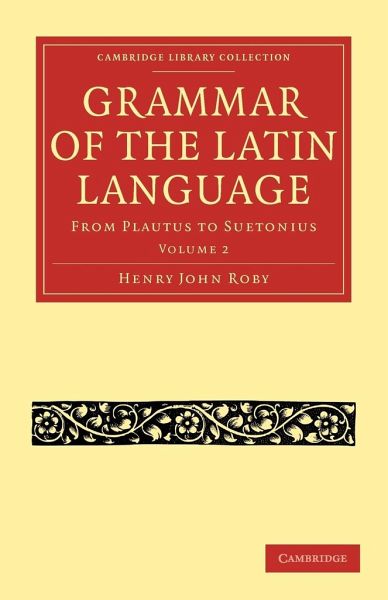
Grammar of the Latin Language - Volume 2
Henry John Roby
Grammar of the Latin Language - Volume 2
- Broschiertes Buch
- Merkliste
- Auf die Merkliste
- Bewerten Bewerten
- Teilen
- Produkt teilen
- Produkterinnerung
- Produkterinnerung
An 1870s descriptive grammar of Latin, still remarkable for its breadth of examples and depth of analysis.
Andere Kunden interessierten sich auch für
Eleanor DickeyLearn Latin from the Romans116,99 €
F. BrittainLatin in Church27,99 €
The Colloquia of the Hermeneumata Pseudodositheana173,99 €
William W. GoodwinSyntax of the Moods and Tenses of the Greek Verb36,99 €
Joseph B. SolodowLatin Alive96,99 €
Language and Linguistic Contact in Ancient Sicily81,99 €
Colloquial and Literary Latin53,99 €-
-
-
An 1870s descriptive grammar of Latin, still remarkable for its breadth of examples and depth of analysis.
Produktdetails
- Produktdetails
- Verlag: Cambridge University Press
- Seitenzahl: 672
- Erscheinungstermin: 2. März 2010
- Englisch
- Abmessung: 216mm x 140mm x 40mm
- Gewicht: 933g
- ISBN-13: 9781108011235
- ISBN-10: 1108011233
- Artikelnr.: 29173741
- Herstellerkennzeichnung
- Libri GmbH
- Europaallee 1
- 36244 Bad Hersfeld
- gpsr@libri.de
- Verlag: Cambridge University Press
- Seitenzahl: 672
- Erscheinungstermin: 2. März 2010
- Englisch
- Abmessung: 216mm x 140mm x 40mm
- Gewicht: 933g
- ISBN-13: 9781108011235
- ISBN-10: 1108011233
- Artikelnr.: 29173741
- Herstellerkennzeichnung
- Libri GmbH
- Europaallee 1
- 36244 Bad Hersfeld
- gpsr@libri.de
Preface
Book IV. Syntax: 1. Classification of words
2. Parts of a simple sentence and use of parts of speech
3. Of the different kinds of sentences
4. Order of words and sentences
5. Use of noun inflexions
6. Use of cases
7. Use of nominative case
8. Use of accusative case
9. Use of dative case
10. Use of locative and ablative cases
11. Use of genitive cases
12. Use of infinitive
13. Tenses of infinitive, when used
14. Use of verbal nouns, especially the gerund and gerundive
15. Use of verb inflexion
16. Use of verbal inflexions of person and number
17. Of indicative and imperative moods and their tenses
18. Of the subjunctive mood and its tenses
19. Typical examples of subjunctive mood and its tenses
20. Use of moods in hypothetical and conditional clauses
21. Use of subjunctive mood to express desire
22. Use of subjunctive mood to express causation
23. Use of subjunctive mood to express alien or contingent assertions
24. Of reported speech
Supplement
Index.

Book IV. Syntax: 1. Classification of words
2. Parts of a simple sentence and use of parts of speech
3. Of the different kinds of sentences
4. Order of words and sentences
5. Use of noun inflexions
6. Use of cases
7. Use of nominative case
8. Use of accusative case
9. Use of dative case
10. Use of locative and ablative cases
11. Use of genitive cases
12. Use of infinitive
13. Tenses of infinitive, when used
14. Use of verbal nouns, especially the gerund and gerundive
15. Use of verb inflexion
16. Use of verbal inflexions of person and number
17. Of indicative and imperative moods and their tenses
18. Of the subjunctive mood and its tenses
19. Typical examples of subjunctive mood and its tenses
20. Use of moods in hypothetical and conditional clauses
21. Use of subjunctive mood to express desire
22. Use of subjunctive mood to express causation
23. Use of subjunctive mood to express alien or contingent assertions
24. Of reported speech
Supplement
Index.
Preface
Book IV. Syntax: 1. Classification of words
2. Parts of a simple sentence and use of parts of speech
3. Of the different kinds of sentences
4. Order of words and sentences
5. Use of noun inflexions
6. Use of cases
7. Use of nominative case
8. Use of accusative case
9. Use of dative case
10. Use of locative and ablative cases
11. Use of genitive cases
12. Use of infinitive
13. Tenses of infinitive, when used
14. Use of verbal nouns, especially the gerund and gerundive
15. Use of verb inflexion
16. Use of verbal inflexions of person and number
17. Of indicative and imperative moods and their tenses
18. Of the subjunctive mood and its tenses
19. Typical examples of subjunctive mood and its tenses
20. Use of moods in hypothetical and conditional clauses
21. Use of subjunctive mood to express desire
22. Use of subjunctive mood to express causation
23. Use of subjunctive mood to express alien or contingent assertions
24. Of reported speech
Supplement
Index.
Book IV. Syntax: 1. Classification of words
2. Parts of a simple sentence and use of parts of speech
3. Of the different kinds of sentences
4. Order of words and sentences
5. Use of noun inflexions
6. Use of cases
7. Use of nominative case
8. Use of accusative case
9. Use of dative case
10. Use of locative and ablative cases
11. Use of genitive cases
12. Use of infinitive
13. Tenses of infinitive, when used
14. Use of verbal nouns, especially the gerund and gerundive
15. Use of verb inflexion
16. Use of verbal inflexions of person and number
17. Of indicative and imperative moods and their tenses
18. Of the subjunctive mood and its tenses
19. Typical examples of subjunctive mood and its tenses
20. Use of moods in hypothetical and conditional clauses
21. Use of subjunctive mood to express desire
22. Use of subjunctive mood to express causation
23. Use of subjunctive mood to express alien or contingent assertions
24. Of reported speech
Supplement
Index.