
Andere Kunden interessierten sich auch für
 Handbook of American Indian Languages Part III.40,99 €
 Navajo Verb65,99 €
 The Verbal Piece in Ebira32,99 €
 New Familiar Abenakis and English Dialogues19,99 €
 Cheyenne56,99 €
 Mitla Zapotec Texts41,99 €
 Ridout's Vocabulary of Shawnee19,99 €







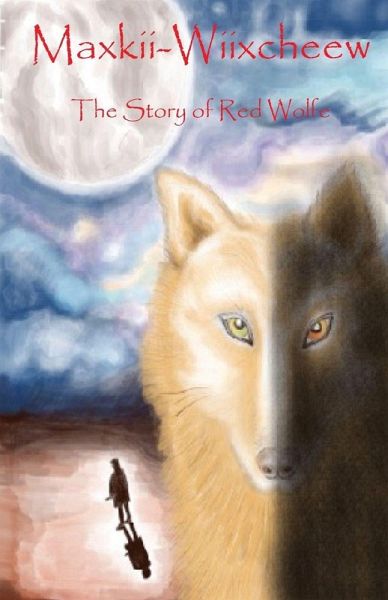
LOG-LINE: Maxkii-Wiixcheew discovers the meaning of his spirit name ("Red Wolfe" in English) as he and his new Huguenot friends Abraham and Isaac learn to communicate, using the ancient (and today nearly extinct) Lunaape language, while they and their faithful companions, two red wolves and an ox named Step, also learn how to live through the murderous rampage of Captain Kregier and his men during the Esopus uprising of 1663 in New Amsterdam (today known as New York). SYNOPSIS: Maxkii-Wiixchew is a work of speculative historical fiction, based on a real-life incident that took place in the Hudson River Valley in 1663 during what has been euphemistically called the second Esopus "war." The story is told from the point of view of young boys who hail from radically different worlds: the title character who, with his two companion wolves that serve as his name sake, befriends Abraham, a young French Huguenot, and Abraham's younger brother, Issac, both of whom come to live among the Esopus people. The Huguenots begin to integrate into the Esopus community, learning their ways and even to speak their language. But their new friendship is tested when Captain Kregier and his contingent of Dutch soldiers are sent into the land of the Esopus to "rescue" the Huguenots and teach the indigenous people a lesson they will never forget, and from which they will never recover. Driven from their ancestral lands, a wounded Maxkii-Wiixchew (known in English as Red Wolfe) and the surviving members of his village retreat into the wilderness, along with a small group of Huguenot children who escape recapture by Kregier and his men, including Jan, a girl with whom the young Esopus boy has become enamored. Returning to their own world, Abraham and Issac readjust to life among the Huguenot settlers, left to ponder the fate of the friends they had made while living among the Esopus.