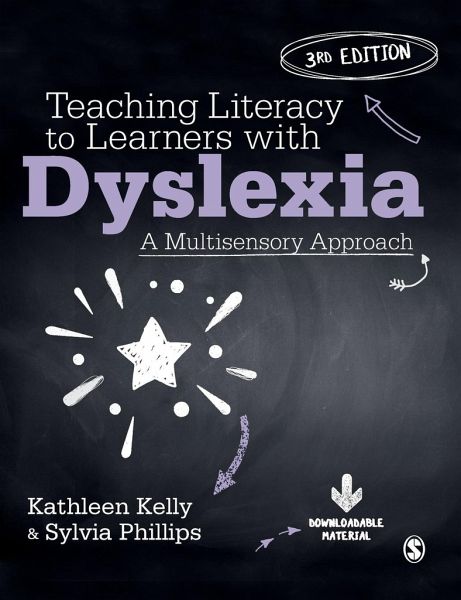
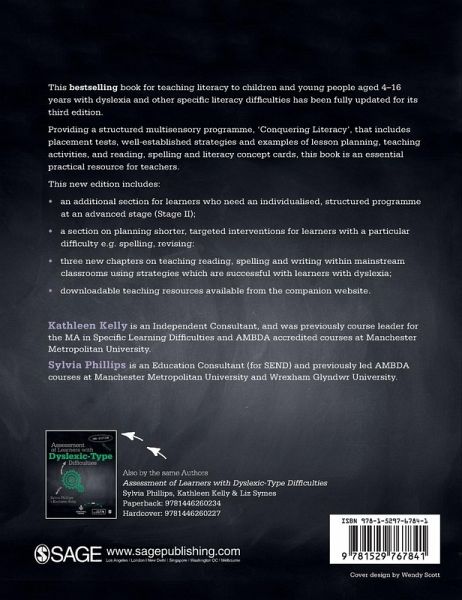
This bestselling text offers theoretical detail and depth alongside a programme of activities to implement in practice which can improve literacy levels and support children with dyslexia.
This bestselling text offers theoretical detail and depth alongside a programme of activities to implement in practice which can improve literacy levels and support children with dyslexia.
About Kathleen Kelly Kathleen Kelly was born in Penrith, NSW, Australia. When she was four her family moved to Brisbane, QLD, Australia. Although born in NSW she considers herself a QUEENSLANDER!! She married her childhood sweetheart and they live in Toowoomba with their two furry kids. A British Short Hair named Grace and a Burmese named Jack. Kathleen enjoys writing contemporary, romance novels with a little bit of erotica. She draws her inspiration from family, friends and the people around her. She can often be found in cafes writing and observing the locals. If you have any questions about her novels or would like to ask Kathleen a question she can be contacted via e-mail: kathleenkellyauthor@gmail.com or she can be found on Facebook. She loves to be contacted by those that love her books. Signup for her newsletter: http://eepurl.com/-x035 Facebook: https://www.facebook.com/kathleenkellyauthor Twitter: https://twitter.com/kkellyauthor Add to Goodreads: http://bit.ly/1xsOGxk Web-site: http://kathleenkellyauthor.com
Inhaltsangabe
Part I: Teaching Learners With Dyslexia: Theory and Context Chapter 1: What Is Dyslexia? Chapter 2: The Role of Memory in Acquiring Literacy Skills Chapter 3: Phonology, Phonological Awareness and Literacy Chapter 4: Reading, Spelling and Dyslexia: Theory and Research Chapter 5: Dyslexia and Learners for Whom English Is an Additional Language Part II: Teaching Literacy to Learners With Dyslexic-Type Difficulties Chapter 6: Strategies for Reading Chapter 7: Strategies for Spelling Chapter 8: Strategies for Writing Part III: Conquering Literacy: A Multisensory Programme for Teaching Learners With Dyslexia Chapter 9: Principles, Teaching Methods and Programme Structure Chapter 10: Lesson Planning Chapter 11: Alphabet Knowledge and Skills Chapter 12: The Role of Memory in the Programme Chapter 13: Introducing the New Teaching Point in a Lesson Part IV: Conquering Literacy - A Multisensory Programme Part V: The Accelerated Programme Part VI: Downloadable Resources
Part I: Teaching Learners With Dyslexia: Theory and Context Chapter 1: What Is Dyslexia? Chapter 2: The Role of Memory in Acquiring Literacy Skills Chapter 3: Phonology, Phonological Awareness and Literacy Chapter 4: Reading, Spelling and Dyslexia: Theory and Research Chapter 5: Dyslexia and Learners for Whom English Is an Additional Language Part II: Teaching Literacy to Learners With Dyslexic-Type Difficulties Chapter 6: Strategies for Reading Chapter 7: Strategies for Spelling Chapter 8: Strategies for Writing Part III: Conquering Literacy: A Multisensory Programme for Teaching Learners With Dyslexia Chapter 9: Principles, Teaching Methods and Programme Structure Chapter 10: Lesson Planning Chapter 11: Alphabet Knowledge and Skills Chapter 12: The Role of Memory in the Programme Chapter 13: Introducing the New Teaching Point in a Lesson Part IV: Conquering Literacy - A Multisensory Programme Part V: The Accelerated Programme Part VI: Downloadable Resources
Es gelten unsere Allgemeinen Geschäftsbedingungen: www.buecher.de/agb
Impressum
www.buecher.de ist ein Internetauftritt der buecher.de internetstores GmbH
Geschäftsführung: Monica Sawhney | Roland Kölbl | Günter Hilger
Sitz der Gesellschaft: Batheyer Straße 115 - 117, 58099 Hagen
Postanschrift: Bürgermeister-Wegele-Str. 12, 86167 Augsburg
Amtsgericht Hagen HRB 13257
Steuernummer: 321/5800/1497
USt-IdNr: DE450055826