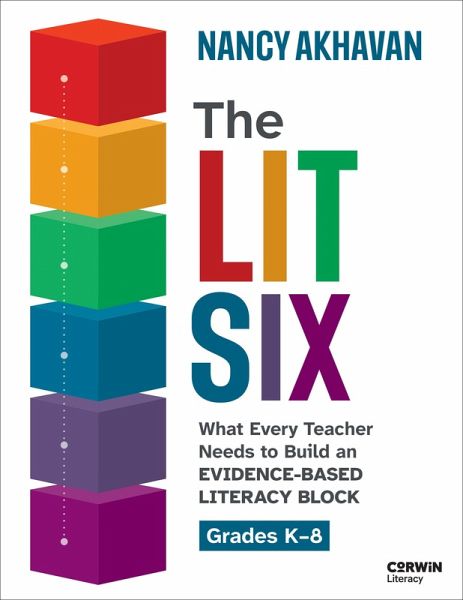
Combine research-backed literacy instruction with classroom routines that help students find reading success As schools embrace the science of reading, implementing evidence-based literacy practices is a must! Yet it can be challenging for busy teachers to know exactly how to put research-based approaches and strategies to work in the classroom. In The Lit Six: What Every Teacher Needs to Build an Evidence-Based Literacy Block, author Nancy Akhavan provides a framework that equips educators with the tools and strategies to build an effective, research-backed literacy block that engages…mehr
Combine research-backed literacy instruction with classroom routines that help students find reading success As schools embrace the science of reading, implementing evidence-based literacy practices is a must! Yet it can be challenging for busy teachers to know exactly how to put research-based approaches and strategies to work in the classroom. In The Lit Six: What Every Teacher Needs to Build an Evidence-Based Literacy Block, author Nancy Akhavan provides a framework that equips educators with the tools and strategies to build an effective, research-backed literacy block that engages students and fosters skilled readers and writers.The book shows teachers how to integrate six essential daily elements for their literacy block: (1) read alouds; (2) shared reading; (3) small group instruction; (4) writing; (5) language (including vocabulary and morphology); and (6) phonemic awareness, phonics, and word work. Designed to address the practical challenges teachers face in aligning teaching practices with the latest science of reading research, this book provides actionable solutions to common questions like "What should I teach first?"and "How do I effectively organize my literacy block?" The Lit Six blends evidence-based daily reading instruction with student-centered approaches to help every learner thrive. Written in Nancy Akhavan¿s signature straightforward and teacher-friendly style, this book offers * A Comprehensive Model: Discover how to integrate six essential components of a successful literacy block into your lessons. * Practical Tools for Teachers: Access scaffolds, decision trees, graphic organizers, and detailed guides to jump-start implementation. * Flexibility in Application: Learn how to apply research-driven practices that create the foundation for great literacy teaching and can be used alongside mandated curriculums to help you meet the needs of all learners in your classroom. * Data-Driven Tips: Discover how to use classroom data to refine instruction and maximize student progress. Rooted in decades of classroom experience and informed by the latest literacy research, this book is your guide to seamlessly blending the art and science of teaching. With The Lit Six, educators can design dynamic literacy blocks that not not align with the research but also respond to the unique needs of their students and foster literacy for all.
Dr. Nancy Akhavan, Ed. D. has spent more than 35 years as an educator and consultant. Dr. Akhavan is the founder of Nancy Akhavan Consulting, Inc. She recently retired from Fresno State as an Associate Professional Emerita. Dr. Akhavan has been a bilingual teacher, principal of three schools, and a district administrator of a large urban district for ELA, math, social studies, science and world languages. She also served as Assistant Superintendent Secondary Division in a large urban school district. Dr. Akhavan is recognized for her expertise in teaching literacy practices and has published thirteen books that focus on literacy instruction that increases student achievement She has worked with districts and county offices in multiple states and internationally to increase student achievement in reading, writing, and in content areas. She continues to provide professional development for leaders and teachers in literacy K-12, early literacy, content area literacy and English language development.
Inhaltsangabe
Acknowledgments About the Author INTRODUCTION Chapter One: Planning an Evidence-Based Literacy Block Oral Language Development First and Always Talking, Reading, and Writing Throughout The Lit Six Time Management and The Lit Six Daily Schedules In Closing Chapter Two: The Reading Science Supporting The Lit Six The Four Processing Systems Involved in Reading In Closing Chapter Three: The Writing Science Supporting The Lit Six The Not-So-Simple View of Writing In Closing Chapter Four: Oral Language Development An Introduction to Oral Language Development Important Skills to Teach Strategies in Action Increasing Exposure to Complex Language Structures Comprehension Strategies Presenting Skills In Closing Chapter Five: Read Alouds An Introduction to Read Alouds Strategies in Action In Closing Chapter Six: Shared Reading An Introduction to Shared Reading The Skills Involved Strategies in Action In Closing Chapter Seven: Small Group and Independent Reading An Introduction to Small Group Instruction and Independent Reading Skills to Address Strategies in Action In Closing Chapter Eight: Phonemic Awareness, Phonics and Word Work An Introduction to Phonemic Awareness, Phonics, and Word Work Skills Strategies in Action Word Work for Grades 3-8 In Closing Chapter Nine: Language Instruction An Introduction to Language Instruction Strategies in Action In Closing Chapter Ten: Writing An Introduction to Writing Grades K-1 Writing Grades 2-5 Writing Grades 6-8 Writing Writing Instruction-Not Assigning Writing Strategies in Action In Closing Appendix Kindergarten Phonemic Awareness and Phonics Scope & Sequence First Grade Phonemic Awareness and Phonics Scope & Sequence Second Grade Phonics Scope & Sequence Common Roots Most Common Prefixes Most Common Suffixes Elkonin Boxes Summary of Word Reading and Spelling Abilities Based on Ehri's (2005) Four Phases of Development Wheel Map Ladder Map T-Chart for Organizing Information Get the Gist Graphic Organizer Timeline Organizer References Index
Acknowledgments About the Author INTRODUCTION Chapter One: Planning an Evidence-Based Literacy Block Oral Language Development First and Always Talking, Reading, and Writing Throughout The Lit Six Time Management and The Lit Six Daily Schedules In Closing Chapter Two: The Reading Science Supporting The Lit Six The Four Processing Systems Involved in Reading In Closing Chapter Three: The Writing Science Supporting The Lit Six The Not-So-Simple View of Writing In Closing Chapter Four: Oral Language Development An Introduction to Oral Language Development Important Skills to Teach Strategies in Action Increasing Exposure to Complex Language Structures Comprehension Strategies Presenting Skills In Closing Chapter Five: Read Alouds An Introduction to Read Alouds Strategies in Action In Closing Chapter Six: Shared Reading An Introduction to Shared Reading The Skills Involved Strategies in Action In Closing Chapter Seven: Small Group and Independent Reading An Introduction to Small Group Instruction and Independent Reading Skills to Address Strategies in Action In Closing Chapter Eight: Phonemic Awareness, Phonics and Word Work An Introduction to Phonemic Awareness, Phonics, and Word Work Skills Strategies in Action Word Work for Grades 3-8 In Closing Chapter Nine: Language Instruction An Introduction to Language Instruction Strategies in Action In Closing Chapter Ten: Writing An Introduction to Writing Grades K-1 Writing Grades 2-5 Writing Grades 6-8 Writing Writing Instruction-Not Assigning Writing Strategies in Action In Closing Appendix Kindergarten Phonemic Awareness and Phonics Scope & Sequence First Grade Phonemic Awareness and Phonics Scope & Sequence Second Grade Phonics Scope & Sequence Common Roots Most Common Prefixes Most Common Suffixes Elkonin Boxes Summary of Word Reading and Spelling Abilities Based on Ehri's (2005) Four Phases of Development Wheel Map Ladder Map T-Chart for Organizing Information Get the Gist Graphic Organizer Timeline Organizer References Index
Es gelten unsere Allgemeinen Geschäftsbedingungen: www.buecher.de/agb
Impressum
www.buecher.de ist ein Internetauftritt der buecher.de internetstores GmbH
Geschäftsführung: Monica Sawhney | Roland Kölbl | Günter Hilger
Sitz der Gesellschaft: Batheyer Straße 115 - 117, 58099 Hagen
Postanschrift: Bürgermeister-Wegele-Str. 12, 86167 Augsburg
Amtsgericht Hagen HRB 13257
Steuernummer: 321/5800/1497
USt-IdNr: DE450055826